Sphenoid sinus: Difference between revisions
CSV import Tags: mobile edit mobile web edit |
CSV import |
||
| Line 30: | Line 30: | ||
{{Anatomy-stub}} | {{Anatomy-stub}} | ||
<gallery> | |||
File:Gray856.png|Sphenoid sinus | |||
File:Illu_nose_nasal_cavities.jpg|Sphenoid sinus | |||
File:Paranasal_Sinuses_lat.jpg|Sphenoid sinus | |||
</gallery> | |||
Latest revision as of 01:33, 18 February 2025
Sphenoid sinus
The Sphenoid sinus is one of the four pairs of paranasal sinuses that are situated in the sphenoid bone. This sinus is located near the base of the nose and is the most posterior of the paranasal sinuses. The sphenoid sinus is responsible for the drainage of mucus.
Anatomy[edit]
The sphenoid sinus is located in the body of the sphenoid bone, behind the nasal cavity and below the pituitary gland. It is separated from the nasal cavity by a thin layer of bone. The sphenoid sinus is divided into two by a septum, creating two uneven cavities.
Function[edit]
The primary function of the sphenoid sinus, like all the paranasal sinuses, is to produce mucus. This mucus helps to humidify the air we breathe and trap any foreign particles. The mucus is then drained into the nasal cavity.
Clinical significance[edit]
Infections of the sphenoid sinus can lead to sphenoid sinusitis, which can cause pain behind the eyes, headaches, and fever. Due to its proximity to important structures such as the optic nerve, carotid artery, and pituitary gland, infections in the sphenoid sinus can have serious complications if not treated promptly.
See also[edit]
References[edit]
<references />

-
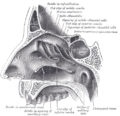 Sphenoid sinus
 -
 Sphenoid sinus
 -
 Sphenoid sinus


