Care farming: Difference between revisions
CSV import |
CSV import |
||
| Line 25: | Line 25: | ||
{{medicine-stub}} | {{medicine-stub}} | ||
<gallery> | |||
File:Hierbas_aromaticas.JPG|Care farming | |||
File:Students_learn_how_to_weed_in_the_specially_designed_wheelchair_accessible_garden_beds._(10727065023).jpg|Students learning how to weed in wheelchair accessible garden beds | |||
</gallery> | |||
Latest revision as of 01:27, 18 February 2025
Care farming is a type of agriculture that combines the care of the land with the care of people. It is a form of green care that uses farming practices for therapeutic purposes. Care farming is also known as green care farming, social farming, or farming for health.
Overview[edit]
Care farming involves the use of agricultural landscapes and farming activities for health, social or educational care services for vulnerable groups of people. This might include people with mental health problems, people suffering from mild to moderate depression, adults and children with learning disabilities, children with autism, those with a drug or alcohol addiction history, disaffected young people, and people on probation.
Benefits[edit]
Care farming can offer a range of benefits for different groups of people. For those with mental health issues, care farming can provide a calming environment that helps to reduce stress and improve mood. For people with learning disabilities or autism, care farming can offer a structured and supportive environment where they can learn new skills and gain confidence. For those with addiction issues, care farming can provide a positive and therapeutic environment away from the triggers of their addiction.
Practices[edit]
Care farming practices can vary widely depending on the specific needs of the individuals involved. Some care farms might focus on animal care, while others might focus on horticulture or other farming activities. The key is that the farming activities are used as a form of therapy or rehabilitation, rather than for commercial agricultural production.
Research[edit]
Research into care farming has shown that it can have a positive impact on mental and physical health. A study published in the journal Public Health found that care farming can lead to improvements in self-esteem, mood, and physical health. Other research has shown that care farming can help to reduce symptoms of depression and anxiety.
See also[edit]

-
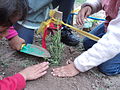 Care farming
 -
 Students learning how to weed in wheelchair accessible garden beds

.jpg)
