Xenon gas MRI: Difference between revisions
CSV import |
CSV import |
||
| Line 33: | Line 33: | ||
{{pharmacology-stub}} | {{pharmacology-stub}} | ||
<gallery> | |||
File:Polarization_Transfer.jpg|Polarization Transfer | |||
File:Xe_Gas_MRI_of_Healthy_and_Diseased_Lungs.png|Xe Gas MRI of Healthy and Diseased Lungs | |||
</gallery> | |||
Latest revision as of 01:24, 18 February 2025
Xenon Gas MRI is a type of Magnetic Resonance Imaging (MRI) that uses xenon gas as a contrast agent to enhance the visibility of certain structures or fluids within the body. This technique is particularly useful in imaging the lungs, as xenon gas is inhaled and can provide detailed images of lung tissue and airways.
Overview[edit]
Magnetic Resonance Imaging (MRI) is a non-invasive imaging technique that uses a powerful magnetic field and radio waves to create detailed images of the inside of the body. In a standard MRI, a contrast agent such as gadolinium may be used to enhance the visibility of certain structures. However, in a Xenon Gas MRI, the patient inhales a mixture of xenon gas and oxygen, which acts as the contrast agent.
Mechanism[edit]
Xenon is a noble gas that is chemically inert and safe to inhale in small quantities. When inhaled, it diffuses into the bloodstream and can be detected by the MRI scanner. The xenon atoms align with the magnetic field of the MRI scanner, and when a radiofrequency pulse is applied, they emit signals that can be detected and used to create an image.
Applications[edit]
Xenon Gas MRI is particularly useful in imaging the lungs, as the gas can provide detailed images of lung tissue and airways. It can be used to diagnose and monitor conditions such as Chronic Obstructive Pulmonary Disease (COPD), Asthma, and Cystic Fibrosis. It can also be used to assess lung function prior to surgery.
Advantages and Disadvantages[edit]
One of the main advantages of Xenon Gas MRI is that it provides more detailed images of the lungs than traditional MRI. It can also be used to image patients who cannot tolerate the contrast agents used in traditional MRI. However, the use of xenon gas can be expensive, and the technique requires specialized equipment and training.
See Also[edit]
References[edit]
External Links[edit]

-
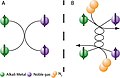 Polarization Transfer
 -
 Xe Gas MRI of Healthy and Diseased Lungs


