Geographical indication: Difference between revisions
CSV import Tags: mobile edit mobile web edit |
CSV import |
||
| Line 27: | Line 27: | ||
{{Intellectual property}} | {{Intellectual property}} | ||
{{food-stub}} | {{food-stub}} | ||
<gallery> | |||
File:GI_Collective_Dimension.png|Geographical indication collective dimension | |||
File:Geographical_Indications_in_force_for_selected_national_and_regional_authorities_in_2022.png|Geographical indications in force for selected national and regional authorities in 2022 | |||
</gallery> | |||
Latest revision as of 01:21, 18 February 2025
Geographical indication (GI) is a name or sign used on certain products which corresponds to a specific geographical location or origin (e.g., a town, region, or country). The use of a GI may act as a certification that the product possesses certain qualities, is made according to traditional methods, or enjoys a certain reputation, due to its geographical origin.
Definition and legal framework[edit]
Geographical indication is a concept in intellectual property law that refers to the use of a geographical name (or a traditional equivalent) that is recognized for a specific product. The GI tag ensures that none other than those registered as authorized users (or at least those residing inside the geographic territory) are allowed to use the popular product name.
In international law, geographical indications are covered by Article 22 of the Trade-Related Aspects of Intellectual Property Rights (TRIPS) Agreement, which came into force in 1995 under the World Trade Organization (WTO). This agreement, also known as the TRIPS Agreement, was the first international treaty to recognize and protect geographical indications.
Types of geographical indications[edit]
There are three types of geographical indications: Protected Designation of Origin (PDO), Protected Geographical Indication (PGI), and Traditional Speciality Guaranteed (TSG). These are schemes designed to protect the reputation of regional foods and promote rural and agricultural activity.
Geographical indications by country[edit]
Each country has its own laws and systems for protecting geographical indications. For example, in the European Union, geographical indications are protected under EU law to prevent misuse and imitation of regional food products. In India, the Geographical Indications of Goods (Registration and Protection) Act, 1999 provides for the registration and better protection of geographical indications relating to goods.
Economic and social impact[edit]
Geographical indications can have significant economic and social impacts. They can add value to products and contribute to rural development by promoting the sustainability of agricultural production and food systems. They can also help to preserve cultural heritage and traditional knowledge.
See also[edit]
- Appellation
- Indication of source
- Terroir
- List of geographical indications in India
- List of geographical indications in the European Union


-
 Geographical indication collective dimension
 -
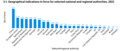 Geographical indications in force for selected national and regional authorities in 2022


