Staphylococcus saprophyticus: Difference between revisions
CSV import Tags: mobile edit mobile web edit |
CSV import |
||
| Line 29: | Line 29: | ||
{{Bacteria-stub}} | {{Bacteria-stub}} | ||
{{Medicine-stub}} | {{Medicine-stub}} | ||
<gallery> | |||
File:Ssaphrophyticus-Novobiocin.jpg|Staphylococcus saprophyticus resistant to Novobiocin | |||
File:S.Saprophyticus.jpg|Staphylococcus saprophyticus | |||
</gallery> | |||
Latest revision as of 01:20, 18 February 2025
Staphylococcus saprophyticus is a Gram-positive bacterium belonging to the genus Staphylococcus. It is a common cause of urinary tract infections (UTIs) in humans, particularly in young sexually active women. Unlike its more notorious relative, Staphylococcus aureus, S. saprophyticus is coagulase-negative, which is a key feature distinguishing it from other Staphylococcus species that are coagulase-positive.
Characteristics[edit]
Staphylococcus saprophyticus is a non-motile, facultative anaerobe that can grow in the presence or absence of oxygen. It forms white, round colonies on agar plates. This bacterium is salt-tolerant and can grow on media containing high concentrations of salt, making it part of the normal flora of the skin and genitourinary tract.
Pathogenesis[edit]
The pathogenicity of S. saprophyticus is associated with its ability to adhere to the uroepithelial cells of the urinary tract. This adherence is facilitated by the presence of adhesins on the bacterial surface. Once attached, the bacteria can colonize the urinary tract, leading to infection. S. saprophyticus is responsible for 5-20% of UTI cases, with a higher prevalence in sexually active young women.
Clinical Presentation[edit]
Infections caused by S. saprophyticus typically present as uncomplicated cystitis, with symptoms including dysuria (painful urination), increased frequency and urgency of urination, and occasionally hematuria (blood in the urine). Pyelonephritis (kidney infection) is less common but can occur, especially if the infection is not treated promptly.
Diagnosis[edit]
Diagnosis of a S. saprophyticus infection is typically made by culturing the bacterium from a urine sample. The presence of a coagulase-negative Staphylococcus species that is not S. epidermidis in a urine culture, especially in a young woman with symptoms of a UTI, is suggestive of S. saprophyticus. Identification can be confirmed through biochemical tests that differentiate it from other coagulase-negative staphylococci.
Treatment[edit]
S. saprophyticus infections are generally treated with antibiotics. The choice of antibiotic may vary based on local antibiotic resistance patterns, but commonly used antibiotics include trimethoprim-sulfamethoxazole, nitrofurantoin, and fluoroquinolones. It is important to complete the full course of antibiotics to ensure the infection is fully eradicated and to reduce the risk of developing antibiotic resistance.
Prevention[edit]
Preventive measures for S. saprophyticus UTIs include practicing good personal hygiene, urinating after sexual intercourse to flush out potential pathogens, and staying well-hydrated to promote frequent urination, which helps to clear bacteria from the urinary tract.
Epidemiology[edit]
While S. saprophyticus is a common cause of UTIs in young women, it can affect individuals of any age and sex. However, infections in men and older women are less common. The incidence of S. saprophyticus UTIs tends to increase in the late summer and early fall, though the reasons for this seasonal variation are not fully understood.


-
 Staphylococcus saprophyticus resistant to Novobiocin
 -
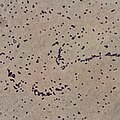 Staphylococcus saprophyticus


