Fosfestrol: Difference between revisions
CSV import Tags: mobile edit mobile web edit |
CSV import |
||
| Line 35: | Line 35: | ||
{{medicine-stub}} | {{medicine-stub}} | ||
== Fosfestrol == | |||
<gallery> | |||
File:Fosfestrol.svg|Fosfestrol chemical structure | |||
File:Testosterone_levels_with_different_estrogen_therapies_in_men_with_prostate_cancer.png|Testosterone levels with different estrogen therapies in men with prostate cancer | |||
</gallery> | |||
Latest revision as of 01:09, 18 February 2025
Fosfestrol is a synthetic estrogen used primarily in the treatment of advanced prostate cancer. It is also known by its alternative name, diethylstilbestrol diphosphate. Fosfestrol works by inhibiting the production of testosterone, which is a hormone that can promote the growth of prostate cancer cells. This medication is part of a class of drugs known as hormone therapy or endocrine therapy, which is aimed at altering the hormonal environment to control the growth of cancer cells.
Mechanism of Action[edit]
Fosfestrol exerts its therapeutic effects by being converted into diethylstilbestrol (DES), an active form, within the body. DES then binds to estrogen receptors on the prostate cancer cells, inhibiting the production and activity of testosterone. This reduction in testosterone levels leads to a decrease in the growth of prostate cancer cells. Additionally, fosfestrol induces apoptosis, or programmed cell death, in prostate cancer cells, further contributing to its anti-cancer effects.
Indications[edit]
Fosfestrol is primarily indicated for the treatment of advanced or metastatic prostate cancer, particularly in cases where the disease has not responded to other forms of treatment. It may be used alone or in combination with other therapies as part of a comprehensive treatment plan.
Administration[edit]
Fosfestrol can be administered orally or through intravenous injection, depending on the specific needs and condition of the patient. The dosage and duration of treatment with fosfestrol are determined by the treating physician based on factors such as the severity of the disease, the patient's overall health, and response to therapy.
Side Effects[edit]
As with any medication, fosfestrol can cause side effects. Common side effects associated with fosfestrol include:
- Nausea and vomiting
- Fluid retention and edema
- Gynecomastia (enlargement of male breasts)
- Cardiovascular effects such as hypertension and thromboembolism
- Decreased libido and impotence
Patients should be monitored closely for these and other side effects, and any adverse reactions should be reported to a healthcare provider.
Contraindications[edit]
Fosfestrol is contraindicated in patients with a known hypersensitivity to the drug or any of its components. It is also contraindicated in patients with severe liver or kidney impairment, as these conditions can affect the metabolism and excretion of the drug. Additionally, fosfestrol should be used with caution in patients with a history of cardiovascular disease or thromboembolic disorders.
Pharmacokinetics[edit]
After administration, fosfestrol is rapidly absorbed and converted into diethylstilbestrol. It has a variable half-life, as it is extensively metabolized in the liver and excreted in the urine. The pharmacokinetics of fosfestrol can be affected by factors such as age, liver function, and the presence of other medications.
Conclusion[edit]
Fosfestrol is an important medication in the management of advanced prostate cancer, offering an alternative for patients who have not responded to other treatments. Its mechanism of action, through the inhibition of testosterone production and induction of apoptosis in cancer cells, makes it a valuable tool in hormone therapy for prostate cancer. However, its use must be carefully managed due to the potential for significant side effects and contraindications.

Fosfestrol[edit]
-
 Fosfestrol chemical structure
 -
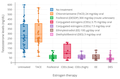 Testosterone levels with different estrogen therapies in men with prostate cancer


