Time bomb: Difference between revisions
CSV import |
CSV import |
||
| Line 38: | Line 38: | ||
* [https://www.britannica.com/technology/time-bomb Britannica - Time Bomb] | * [https://www.britannica.com/technology/time-bomb Britannica - Time Bomb] | ||
{{dictionary-stub1}} | {{dictionary-stub1}} | ||
<gallery> | |||
File:Strage_di_bologna_002.jpg|Bologna massacre aftermath | |||
File:Grand-Hotel-Following-Bomb-Attack-1984-10-12.jpg|Grand Hotel bombing aftermath | |||
File:Pipe_bomb_01.svg|Time bomb | |||
</gallery> | |||
Latest revision as of 01:07, 18 February 2025
Time Bomb[edit]
A time bomb is a type of explosive device that is designed to detonate after a certain period of time has elapsed. It is a highly dangerous weapon that has been used in various contexts throughout history. This article will explore the history, construction, and impact of time bombs.
History[edit]
The concept of a time bomb dates back to ancient times, where rudimentary forms of timed explosives were used in warfare. However, it was not until the 19th century that the modern concept of a time bomb emerged. The invention of mechanical clocks and the development of reliable timing mechanisms paved the way for the creation of more sophisticated timed explosives.
One of the earliest recorded instances of a time bomb being used was during the 19th century anarchist movement. Anarchists, seeking to disrupt societal order, utilized time bombs as a means of carrying out acts of terrorism. These bombs were often hidden in public places and set to detonate at a specific time, causing widespread panic and destruction.
Construction[edit]
Time bombs can be constructed using various methods and materials, depending on the desired effect and the expertise of the individual or group creating them. The basic components of a time bomb typically include an explosive material, a timing mechanism, and a triggering mechanism.
The explosive material used in time bombs can vary, but common choices include dynamite, C-4, or homemade explosives. The timing mechanism is responsible for determining when the bomb will detonate. This can be achieved through the use of mechanical clocks, electronic timers, or even simple chemical reactions.
The triggering mechanism is what initiates the detonation process. This can be as simple as a basic fuse or as complex as a remote-controlled device. The choice of triggering mechanism depends on the intended use of the time bomb and the level of sophistication required.
Impact[edit]
The impact of time bombs can be devastating, both in terms of loss of life and property damage. Throughout history, time bombs have been used in acts of terrorism, warfare, and criminal activities. The psychological impact of a time bomb is often significant, as it creates a sense of fear and uncertainty among the targeted population.
In recent years, advancements in technology have made it easier for individuals or groups to construct and deploy time bombs. This has raised concerns among law enforcement agencies and security experts, who must constantly adapt their strategies to counter this evolving threat.
See Also[edit]
References[edit]
<references />
External Links[edit]

-
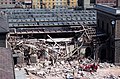 Bologna massacre aftermath
 -
 Grand Hotel bombing aftermath
 -
 Time bomb


