Out-of-body experience: Difference between revisions
No edit summary |
CSV import Tags: mobile edit mobile web edit |
||
| Line 24: | Line 24: | ||
# "Out-of-body experiences and other complex dissociation experiences in a patient with unilateral peripheral vestibular damage and deficient multisensory integration." Multisensory Research. [https://www.jbe-platform.com/content/journals/10.1163/22134808-00002569] | # "Out-of-body experiences and other complex dissociation experiences in a patient with unilateral peripheral vestibular damage and deficient multisensory integration." Multisensory Research. [https://www.jbe-platform.com/content/journals/10.1163/22134808-00002569] | ||
# "Simulating Out-of-Body Experiences through Virtual Reality." Frontiers in Psychology. [https://www.frontiersin.org/articles/10.3389/fpsyg.2018.01431/full] | # "Simulating Out-of-Body Experiences through Virtual Reality." Frontiers in Psychology. [https://www.frontiersin.org/articles/10.3389/fpsyg.2018.01431/full] | ||
<gallery> | |||
File:Astral_640.jpg|Out-of-body experience | |||
File:Schiavonetti_Soul_leaving_body_1808.jpg|Out-of-body experience | |||
</gallery> | |||
Latest revision as of 01:02, 18 February 2025
An out-of-body experience (OBE), occasionally referred to as OOBE, is an intriguing psychological event in which an individual feels or perceives themselves as if they're detached from or outside their physical body. This phenomenon is often associated with a sense of floating and observing the world from a third-person perspective. While similar to autoscopy, the term 'autoscopy' generally describes a pathological state in which an individual sees an apparition of their own self, often referred to as a doppelgänger.
Phenomenology of OBEs[edit]
During an OBE, individuals often report sensing a clear distinction between their perceived 'self' or consciousness, and their physical body. This sensation may be coupled with a feeling of freedom, unbounded by physical limitations. Other reported perceptions include a sense of peace, witnessing one's physical body from an elevated perspective, and traversing environments that seem hyperrealistic or ethereal.
Psychological and Neurological Perspectives[edit]
The consensus among psychologists and neuroscientists is that OBEs are a subtype of dissociative phenomena, produced by different psychological and neurological factors. This means they can be triggered by various conditions or circumstances, from sleep disturbances to more serious neurological conditions.
Certain brain regions, such as the right angular gyrus and the temporoparietal junction, have been associated with inducing OBEs when stimulated. These regions are implicated in spatial awareness and the perception of one's body in space. Thus, unusual activity in these areas may disrupt the perception of self-location and body ownership, leading to an OBE.
Cultural and Historical Perspectives[edit]
OBEs have been reported in various cultural and historical contexts, often associated with spiritual or mystical experiences. In contemporary western societies, they're frequently discussed in the context of near-death experiences, meditation, and the use of psychoactive substances.
Potential Implications and Future Research[edit]
Understanding OBEs not only contributes to our knowledge of human consciousness and self-perception, but may also have therapeutic implications. For example, virtual reality technology that simulates OBEs has been explored as a potential treatment for conditions like chronic pain and anxiety disorders.
 | |
|---|---|
 |
 |
References[edit]
<references/>
- "Out-of-body experience, heautoscopy, and autoscopic hallucination of neurological origin." Journal of Neurology, Neurosurgery, and Psychiatry. [1]
- "Brain activity and functional connectivity associated with hypnosis." Cerebral Cortex. [2]
- "The Out-of-Body Experience: Disturbed Self-Processing at the Temporo-Parietal Junction." Neuroscientist. [3]
- "Out-of-body experiences and other complex dissociation experiences in a patient with unilateral peripheral vestibular damage and deficient multisensory integration." Multisensory Research. [4]
- "Simulating Out-of-Body Experiences through Virtual Reality." Frontiers in Psychology. [5]
-
 Out-of-body experience
 -
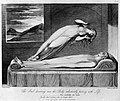 Out-of-body experience


