Phosphopentose epimerase: Difference between revisions
CSV import Tags: mobile edit mobile web edit |
CSV import |
||
| Line 30: | Line 30: | ||
[[Category:Metabolism]] | [[Category:Metabolism]] | ||
{{enzyme-stub}} | {{enzyme-stub}} | ||
== Phosphopentose_epimerase == | |||
<gallery> | |||
File:3inp.jpg|Phosphopentose_epimerase | |||
File:Phosphoenolase_Epimerase_Mechanism.png|Phosphoenolase Epimerase Mechanism | |||
</gallery> | |||
Latest revision as of 01:01, 18 February 2025
Phosphopentose epimerase is an enzyme that plays a crucial role in the Pentose phosphate pathway, a metabolic pathway parallel to glycolysis. It catalyzes the conversion of Ribulose 5-phosphate (Ru5P) into Xylulose 5-phosphate (Xu5P), a reaction that is essential for the interconversion of sugars in the pentose phosphate pathway and for the biosynthesis of nucleotides and nucleic acids. This enzyme is found in a wide variety of organisms, including bacteria, plants, and animals, highlighting its fundamental role in cellular metabolism.
Function[edit]
Phosphopentose epimerase operates by catalyzing the epimerization of the carbon atom at position 3 of ribulose 5-phosphate, a pentose sugar derived from the oxidative phase of the pentose phosphate pathway. This reaction is reversible and does not require energy input, making it a key step in the non-oxidative phase of the pathway. The product, xylulose 5-phosphate, can then enter the series of reactions that lead to the synthesis of nucleotides and nucleic acids, or it can be further processed to regenerate Ribose 5-phosphate, a direct precursor for the synthesis of DNA and RNA.
Mechanism[edit]
The exact mechanism of phosphopentose epimerase involves the abstraction of a proton from the second carbon of ribulose 5-phosphate, followed by a re-protonation on the opposite face of the molecule. This reaction results in the inversion of the stereochemistry at this carbon, converting the molecule from a ketose to an aldose form, or vice versa, depending on the direction of the reaction. The enzyme's active site contains residues that stabilize the transition state and facilitate the proton transfer, ensuring the reaction proceeds efficiently.
Clinical Significance[edit]
Alterations in the activity of phosphopentose epimerase can have significant metabolic consequences, given the enzyme's role in nucleotide biosynthesis and energy metabolism. Although specific diseases have not been directly linked to mutations in the gene encoding this enzyme, its overall importance in metabolic pathways suggests that dysregulation could contribute to broader metabolic disorders. Research into the enzyme's function and regulation may provide insights into metabolic diseases and potential therapeutic targets.
Genetic Information[edit]
The gene encoding phosphopentose epimerase is present in a wide range of organisms, reflecting its essential role in metabolism. In humans, this gene is located on chromosome 1 and is highly conserved, indicating its critical function across different species. The enzyme's structure and active site have been characterized in detail, providing insights into its catalytic mechanism and potential for regulation.
See Also[edit]
References[edit]
<references/>
External Links[edit]

Phosphopentose_epimerase[edit]
-
 Phosphopentose_epimerase
 -
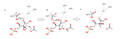 Phosphoenolase Epimerase Mechanism


