Acrosome reaction: Difference between revisions
CSV import |
CSV import |
||
| Line 32: | Line 32: | ||
[[Category:Reproductive system]] | [[Category:Reproductive system]] | ||
[[Category:Cell biology]] | [[Category:Cell biology]] | ||
== Acrosome_reaction == | |||
<gallery> | |||
File:Acrosome_reaction_diagram_en.svg|Diagram of the acrosome reaction | |||
File:Acrosomal_Reaction.svg|Illustration of the acrosomal reaction | |||
</gallery> | |||
Latest revision as of 00:58, 18 February 2025
Acrosome Reaction[edit]
The acrosome reaction is a crucial physiological process that occurs in the sperm cells of many animal species, including humans, during fertilization. This reaction enables the sperm to penetrate the outer layers of the egg, facilitating the fusion of the sperm and egg membranes and ultimately leading to fertilization.
Structure of the Acrosome[edit]
The acrosome is a cap-like structure that covers the anterior half of the sperm's head. It is derived from the Golgi apparatus and contains digestive enzymes such as hyaluronidase and acrosin. These enzymes are essential for breaking down the protective layers surrounding the oocyte, specifically the zona pellucida.
Mechanism of the Acrosome Reaction[edit]
The acrosome reaction is initiated when the sperm comes into contact with the zona pellucida of the egg. This contact triggers a series of biochemical events:
- Binding to the Zona Pellucida: The sperm binds to specific glycoproteins on the zona pellucida, primarily ZP3, which acts as a receptor for the sperm.
- Calcium Ion Influx: The binding induces an influx of calcium ions into the sperm cell, which is a critical signal for the acrosome reaction.
- Fusion of Membranes: The increased calcium concentration causes the outer acrosomal membrane to fuse with the sperm's plasma membrane.
- Release of Enzymes: The fusion results in the exocytosis of acrosomal enzymes, which digest the zona pellucida, allowing the sperm to penetrate the egg.
Significance in Fertilization[edit]
The acrosome reaction is essential for successful fertilization. Without this process, the sperm would be unable to penetrate the zona pellucida, preventing the sperm from reaching the egg's plasma membrane. The reaction also exposes the inner acrosomal membrane, which contains proteins that facilitate the binding and fusion of the sperm and egg membranes.
Related Pages[edit]
Gallery[edit]
-
 Diagram of the acrosome reaction
 -
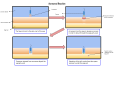 Illustration of the acrosomal reaction


Acrosome_reaction[edit]
-
Diagram of the acrosome reaction
-
Illustration of the acrosomal reaction
