Daffy's Elixir: Difference between revisions
CSV import Tags: mobile edit mobile web edit |
CSV import |
||
| Line 21: | Line 21: | ||
{{pharma-stub}} | {{pharma-stub}} | ||
== Daffy's Elixir == | |||
<gallery> | |||
File:Three_early_medicine_bottles.jpg|Three early medicine bottles | |||
File:Daffy's_elixir.jpg|Daffy's elixir | |||
File:Malatesta.png|Malatesta | |||
</gallery> | |||
Latest revision as of 00:54, 18 February 2025
Daffy's Elixir is a historic medicinal tonic that was popular in the 17th and 18th centuries as a cure-all remedy. Its origins trace back to the English clergyman and chemist, Thomas Daffy. The elixir was primarily marketed as a solution for various ailments, including stomach issues, gout, and fever. Over time, Daffy's Elixir became a household name, with its recipe being a closely guarded secret, often passed down through generations or sold for a significant sum.
Composition[edit]
The primary ingredients of Daffy's Elixir included senna, alcohol, aniseed, and manna. Other components, such as rhubarb, licorice, and raisins, were also commonly cited in various recipes. The concoction was known for its strong laxative properties, attributed mainly to the senna leaves, a well-known natural laxative.
History[edit]
Thomas Daffy, the creator of Daffy's Elixir, first formulated the tonic in the mid-17th century. It was initially intended as a medicinal remedy for his family and close acquaintances. However, the elixir's popularity quickly grew, leading to widespread commercial production and distribution. By the 18th century, Daffy's Elixir was one of the most sought-after medicinal tonics in England and had begun to gain popularity in other parts of Europe and the Americas.
Medical Claims and Usage[edit]
Daffy's Elixir was marketed as a panacea capable of treating a wide range of conditions. Advertisements claimed it could cure fevers, aid in digestion, relieve gout, and even act as a preventative measure against various diseases. Despite these claims, the scientific community today recognizes that the elixir's effectiveness was primarily due to its laxative effect, helping to relieve constipation and cleanse the body.
Regulation and Decline[edit]
As medical science advanced, the claims made by producers of Daffy's Elixir came under scrutiny. The 19th century saw a push for more stringent regulation of medicinal products, leading to a decline in the popularity of cure-alls like Daffy's Elixir. The introduction of the Pharmacy Act in the United Kingdom, which regulated the sale of poisons and dangerous drugs, marked the beginning of the end for many such tonics.
Legacy[edit]
Today, Daffy's Elixir is remembered more for its place in medical history than for its medicinal properties. It serves as an example of the early days of patent medicines and the shift towards more scientifically backed medical treatments. The story of Daffy's Elixir highlights the evolution of public health policy and the increasing demand for evidence-based medicine.

Daffy's Elixir[edit]
-
 Three early medicine bottles
 -
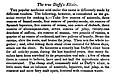 Daffy's elixir
 -
 Malatesta


