Contour plowing: Difference between revisions
CSV import |
CSV import |
||
| Line 25: | Line 25: | ||
{{Agriculture-stub}} | {{Agriculture-stub}} | ||
<gallery> | |||
File:Contour_plowing.jpg|Contour plowing | |||
File:Contour_line_8_gener_2007.jpg|Contour line | |||
File:Chlorbenzoxamine_synthesis.png|Chlorbenzoxamine synthesis | |||
</gallery> | |||
Latest revision as of 00:49, 18 February 2025

Contour plowing, also known as contour farming, is an agricultural practice that involves plowing and planting across a slope following its elevation contour lines. These contour lines create a water break, which reduces the formation of gullies during rainstorms by allowing the water to flow down the slope in a controlled manner. The primary goal of contour plowing is to conserve rainwater and reduce soil erosion, which are critical components in sustainable agriculture.
Overview[edit]
Contour plowing is most effective on slopes between 2% and 10%. The method involves plowing, planting, and cultivating in a pattern that runs perpendicular to the natural slope of the land, rather than up and down the slope. This technique helps to create natural barriers for water flow, significantly reducing the speed of water runoff and encouraging water infiltration into the soil. As a result, contour plowing can help to preserve valuable topsoil, improve soil moisture levels, and reduce the risk of soil erosion.
Benefits[edit]
The benefits of contour plowing are numerous. By reducing runoff, this practice helps to conserve water and protect against drought. It also minimizes soil erosion, which is beneficial for maintaining soil health and fertility. Furthermore, contour plowing can increase crop yields by improving water availability to plants and reducing water and wind erosion. Additionally, this method contributes to the reduction of sedimentation in nearby water bodies, which can have positive effects on aquatic ecosystems.
Implementation[edit]
To implement contour plowing, farmers first need to determine the contour lines of their fields. This can be done using traditional surveying tools or modern GPS technology. Once the contour lines are established, the land can be plowed along these lines. It is important for farmers to maintain the contour lines with each subsequent planting to ensure the effectiveness of the technique.
Challenges[edit]
Despite its benefits, contour plowing presents several challenges. It requires careful planning and execution, as incorrect implementation can lead to reduced effectiveness or even exacerbate erosion problems. Additionally, contour plowing can be more labor-intensive and time-consuming than traditional plowing methods, which may deter some farmers from adopting the practice.
Environmental Impact[edit]
Contour plowing has a positive impact on the environment. By reducing soil erosion and runoff, it helps to maintain healthier soil and water ecosystems. This practice also contributes to carbon sequestration in the soil, which can help mitigate climate change by reducing atmospheric CO2 levels.
Conclusion[edit]
Contour plowing is a valuable agricultural practice that offers significant benefits for soil conservation, water management, and crop production. Despite its challenges, the adoption of contour plowing can lead to more sustainable farming practices and a healthier environment.

This article is a agriculture stub. You can help WikiMD by expanding it!
-
 Contour plowing
 -
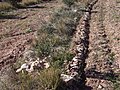 Contour line
 -
 Chlorbenzoxamine synthesis


