Fowl cholera: Difference between revisions
CSV import |
CSV import |
||
| Line 22: | Line 22: | ||
[[Category:Bacterial diseases]] | [[Category:Bacterial diseases]] | ||
{{Animal-disease-stub}} | {{Animal-disease-stub}} | ||
<gallery> | |||
File:Colera_poyes_schite.jpg|Description of Colera_poyes_schite.jpg | |||
File:Colera_poyes_necrôze_foete.jpg|Description of Colera_poyes_necrôze_foete.jpg | |||
File:Terebratalia_transversa_141510036.jpg|Description of Terebratalia_transversa_141510036.jpg | |||
</gallery> | |||
Latest revision as of 00:45, 18 February 2025
Fowl cholera is a highly contagious disease that affects domestic and wild birds. It is caused by the bacterium Pasteurella multocida, and is characterized by sudden death, fever, and greenish diarrhea. The disease is prevalent worldwide and can cause significant economic losses in the poultry industry.
Etiology[edit]
The causative agent of fowl cholera is Pasteurella multocida, a small, gram-negative, nonmotile, nonspore-forming, rod-shaped bacterium. The bacterium is capable of surviving in the environment for extended periods, particularly in moist and cool conditions.
Epidemiology[edit]
Fowl cholera is a worldwide disease, affecting both domestic and wild birds. It is most commonly seen in chickens, turkeys, ducks, and geese, but can also affect other bird species. The disease is transmitted through direct contact with infected birds or contaminated water and feed. Birds of all ages can be affected, but the disease is most severe in mature birds.
Clinical Signs and Diagnosis[edit]
Clinical signs of fowl cholera can vary depending on the form of the disease. In the acute form, birds may die suddenly without showing any signs. In the chronic form, signs may include loss of appetite, depression, diarrhea, and swelling of the wattles and joints. Diagnosis is typically based on clinical signs and confirmed by isolation and identification of Pasteurella multocida from the affected birds.
Treatment and Control[edit]
Treatment of fowl cholera involves the use of antibiotics, such as penicillin or tetracycline. However, treatment is often not effective in controlling the disease due to the rapid spread of the bacterium. Prevention and control measures include good sanitation practices, vaccination, and the culling of infected birds.
See Also[edit]
Error creating thumbnail: This animal disease related article is a stub. You can help WikiMD by expanding it.
-
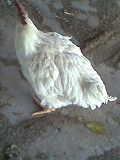 Description of Colera_poyes_schite.jpg
 -
 Description of Colera_poyes_necrôze_foete.jpg
 -
 Description of Terebratalia_transversa_141510036.jpg


