Facilitated communication: Difference between revisions
CSV import |
CSV import |
||
| Line 28: | Line 28: | ||
File:dynawrite.jpg | File:dynawrite.jpg | ||
File:Anne_McDonald_Centre.jpg | File:Anne_McDonald_Centre.jpg | ||
</gallery> | |||
== Facilitated_communication == | |||
<gallery> | |||
File:dynawrite.jpg|Facilitated_communication | |||
File:Anne_McDonald_Centre.jpg|Anne McDonald Centre | |||
</gallery> | </gallery> | ||
Revision as of 00:44, 18 February 2025
Facilitated Communication (FC), also known as Supported Typing or Hand Over Hand, is a controversial technique used in special education and communication therapy. It involves a facilitator physically assisting an individual with severe communication impairments to use a keyboard or other communication device.
History
Facilitated Communication was developed in Australia during the 1970s by Rosemary Crossley, an educator and disability rights activist. It was initially used to assist individuals with Cerebral Palsy and later extended to those with Autism Spectrum Disorder and other communication impairments.
Method
In Facilitated Communication, the facilitator supports the individual's hand, wrist, or arm, enabling them to point to letters, words, or symbols on a communication board or device. The facilitator is trained to provide minimal physical support and to resist the temptation to guide the individual's movements.
Controversy
Despite anecdotal reports of success, Facilitated Communication has been widely criticized for its lack of scientific validity. Many studies have shown that the messages produced are often controlled by the facilitator rather than the individual. This phenomenon, known as the Ouija Board Effect, raises serious ethical and legal concerns, particularly in cases where the technique has been used to make allegations of abuse.
Current Use
Despite the controversy, Facilitated Communication continues to be used in some educational and therapeutic settings. Advocates argue that it can provide a voice for individuals who are otherwise unable to communicate. Critics, however, caution that the technique can be misused and call for more rigorous training and oversight.
See Also
References
<references />
This communication related article is a stub. You can help WikiMD by expanding it.


Facilitated_communication
-
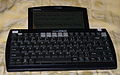 Facilitated_communication
 -
 Anne McDonald Centre
