Cataract-ataxia-deafness syndrome: Difference between revisions
CSV import |
CSV import |
||
| Line 29: | Line 29: | ||
[[Category:Syndromes]] | [[Category:Syndromes]] | ||
{{medicine-stub}} | {{medicine-stub}} | ||
<gallery> | |||
File:Cataracts_due_to_Congenital_Rubella_Syndrome_(CRS)_PHIL_4284_lores.jpg|Cataracts due to Congenital Rubella Syndrome | |||
</gallery> | |||
Revision as of 02:11, 17 February 2025
Cataract-Ataxia-Deafness Syndrome (CADS) is a rare genetic disorder characterized by the triad of cataract, ataxia, and deafness. This syndrome represents a complex condition where multiple systems in the body are affected, leading to significant challenges in diagnosis and management. The etiology of CADS is not fully understood, but it is believed to involve mutations in genes that are crucial for the development and function of the eyes, ears, and nervous system.
Symptoms and Diagnosis
The primary symptoms of Cataract-Ataxia-Deafness Syndrome include:
- Cataracts: The development of cloudy areas in the lens of the eye, leading to decreased vision.
- Ataxia: A lack of muscle coordination which can affect speech, eye movements, the ability to swallow, walk, and perform fine motor tasks.
- Deafness: Hearing impairment ranging from mild to profound deafness.
Diagnosis of CADS is based on clinical evaluation and the presence of the characteristic symptoms. Genetic testing may also be conducted to identify mutations associated with the syndrome, although the specific genes involved may not be identified in all cases.
Genetic Aspects
While the exact genetic mutations responsible for CADS are not fully known, the condition is thought to be inherited in an autosomal recessive manner. This means that an individual must inherit two copies of the mutated gene, one from each parent, to be affected by the syndrome. Parents of an individual with CADS are typically carriers of one copy of the mutated gene but do not show symptoms of the condition.
Management and Treatment
There is no cure for Cataract-Ataxia-Deafness Syndrome, and treatment is symptomatic and supportive. Management strategies may include:
- Surgical removal of cataracts to improve vision.
- Use of hearing aids or cochlear implants for deafness.
- Physical therapy and occupational therapy to help with ataxia and improve mobility and daily functioning.
Early intervention and a multidisciplinary approach are crucial for improving the quality of life of individuals with CADS.
Prognosis
The prognosis for individuals with Cataract-Ataxia-Deafness Syndrome varies depending on the severity of the symptoms and the effectiveness of management strategies. With appropriate care, individuals with CADS can lead fulfilling lives, although they may face challenges related to vision, hearing, and mobility.

-
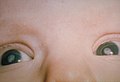 Cataracts due to Congenital Rubella Syndrome
_PHIL_4284_lores.jpg)
