Nuclear weapons debate: Difference between revisions
CSV import |
CSV import Tags: mobile edit mobile web edit |
||
| Line 34: | Line 34: | ||
[[Category:International security]] | [[Category:International security]] | ||
{{military-stub}} | {{military-stub}} | ||
<gallery> | |||
File:Hiroshima_aftermath.jpg|Aftermath of the Hiroshima bombing | |||
File:Nagasakibomb.jpg|Nagasaki bomb explosion | |||
</gallery> | |||
Revision as of 01:59, 17 February 2025
Nuclear weapons debate refers to the discourse surrounding the use, proliferation, and existence of nuclear weapons. This debate is characterized by differing viewpoints on issues such as nuclear deterrence, nuclear disarmament, and nuclear proliferation.
History
The nuclear weapons debate has its roots in the Manhattan Project, the U.S. research project that developed the first nuclear weapons during World War II. The bombings of Hiroshima and Nagasaki in 1945 marked the first and only uses of nuclear weapons in warfare, sparking global discussions on the ethical and practical implications of such weaponry.
Key Issues
Nuclear Deterrence
Nuclear deterrence is the concept that the threat of using strong weapons against the enemy prevents the enemy's use of those same weapons. The strategy is a key point in the debate over nuclear weapons, with proponents arguing that nuclear weapons provide a necessary deterrent against potential threats, while opponents argue that the strategy promotes an arms race and increases the risk of nuclear warfare.
Nuclear Disarmament
Nuclear disarmament refers to the reduction or elimination of all nuclear weapons. Advocates for disarmament argue that the only way to ensure nuclear weapons will not be used in the future is to eliminate them entirely. Critics, however, argue that disarmament would leave nations vulnerable to those who do not adhere to disarmament agreements.
Nuclear Proliferation
Nuclear proliferation is the spread of nuclear weapons, fissionable material, and weapons-applicable nuclear technology and information, to nations which are not recognized as "Nuclear Weapon States" by the Treaty on the Non-Proliferation of Nuclear Weapons. The debate around proliferation centers on the balance between the peaceful use of nuclear energy and the potential for misuse of nuclear materials and technology.
See Also
References
<references />

-
 Aftermath of the Hiroshima bombing
 -
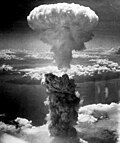 Nagasaki bomb explosion


