Administrative division: Difference between revisions
CSV import |
CSV import |
||
| Line 53: | Line 53: | ||
[[Category:Administrative divisions]] | [[Category:Administrative divisions]] | ||
== Administrative division == | |||
<gallery> | |||
File:Blank_Map_World_Secondary_Political_Divisions.svg | |||
</gallery> | |||
Latest revision as of 00:58, 17 February 2025
A type of territorial entity within a country
Administrative division refers to a portion of a country or other region delineated for the purpose of administration. These divisions are granted a certain degree of autonomy and are often governed by local authorities. Administrative divisions are crucial for the organization of a country's territory and the management of its resources and population.
Types of Administrative Divisions[edit]
Administrative divisions can vary significantly from one country to another, both in terms of their names and their functions. Common types of administrative divisions include:
Each type of division may have different levels of authority and responsibility, depending on the country's governmental structure.
Functions of Administrative Divisions[edit]
Administrative divisions serve several key functions, including:
- Governance: They provide a framework for local governance, allowing for the implementation of national policies at a local level.
- Resource Management: Divisions help in the allocation and management of resources, ensuring that local needs are met efficiently.
- Statistical Analysis: They are used for statistical purposes, helping governments and organizations to collect and analyze data.
- Public Services: Administrative divisions are responsible for the delivery of public services such as education, healthcare, and infrastructure.
Examples of Administrative Divisions[edit]
Different countries have unique systems of administrative divisions. Some examples include:
- In the United States, the primary administrative divisions are states, which are further divided into counties and cities.
- In Canada, the country is divided into provinces and territories, each with its own government.
- China is divided into provinces, autonomous regions, and municipalities.
- India consists of states and union territories.
Challenges in Administrative Division[edit]
The creation and management of administrative divisions can present several challenges, such as:
- Boundary Disputes: Conflicts may arise over the delineation of boundaries between divisions.
- Resource Allocation: Ensuring equitable distribution of resources can be difficult, especially in regions with varying levels of development.
- Cultural Differences: Administrative divisions may encompass diverse cultural groups, requiring sensitive governance to maintain harmony.
Related Pages[edit]
Gallery[edit]
-
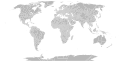 A map showing secondary political divisions of the world.

