Abnormal urine color: Difference between revisions
CSV import |
CSV import |
||
| Line 43: | Line 43: | ||
[[Category:Urine]] | [[Category:Urine]] | ||
[[Category:Symptoms and signs: Urinary system]] | [[Category:Symptoms and signs: Urinary system]] | ||
<gallery> | |||
File:Urine_samples_of_varying_colour_and_clarity.jpg | |||
</gallery> | |||
Revision as of 21:58, 16 February 2025
Overview of abnormal urine color and its causes
Abnormal urine color refers to any variation in the color of urine that deviates from the typical pale yellow hue. This can be caused by a variety of factors, including dietary influences, medications, and underlying medical conditions. Understanding the potential causes of abnormal urine color is important for diagnosing and managing health issues.
Normal Urine Color
Urine is typically a pale yellow color due to the presence of a pigment called urochrome. The concentration of urochrome and the amount of water in the urine can affect its color, ranging from nearly clear to a deep amber.
Causes of Abnormal Urine Color
Dietary Factors
Certain foods can alter the color of urine. For example, consuming large amounts of beets can lead to a reddish urine color, a condition known as beeturia. Similarly, asparagus can cause a greenish tint.
Medications
Several medications can change urine color. For instance, rifampin, an antibiotic, can cause urine to appear orange or red. Phenazopyridine, used to relieve urinary tract discomfort, can also result in orange urine.
Medical Conditions
Various medical conditions can lead to abnormal urine color:
- Hematuria: The presence of blood in the urine can cause it to appear pink, red, or brown.
- Jaundice: This condition, characterized by high levels of bilirubin in the blood, can cause urine to appear dark yellow or brown.
- Porphyria: A group of disorders affecting the skin and nervous system, porphyria can cause urine to turn purple or red.
Dehydration
Dehydration can lead to concentrated urine, which appears darker than normal. This is due to the reduced water content in the urine, increasing the concentration of urochrome.
Diagnosis and Evaluation
When evaluating abnormal urine color, healthcare providers consider the patient's medical history, dietary habits, and medication use. Urinalysis is a common diagnostic tool used to assess urine composition and identify potential causes of discoloration.
Management
Treatment for abnormal urine color depends on the underlying cause. For instance, if dehydration is the cause, increasing fluid intake is recommended. If a medication is responsible, a healthcare provider may adjust the dosage or prescribe an alternative.
Related pages
Gallery
-
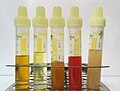 Urine samples of varying color and clarity

