Transmitter: Difference between revisions
CSV import |
CSV import |
||
| Line 1: | Line 1: | ||
== Transmitter == | |||
A ''' | A '''transmitter''' is an electronic device that produces radio waves with an antenna. The transmitter itself generates a radio frequency alternating current, which is applied to the antenna. When excited by this alternating current, the antenna radiates radio waves. Transmitters are necessary components of all electronic devices that communicate by radio, such as [[radio]] and [[television]] broadcasting stations, [[cellular phones]], [[wireless computer networks]], [[Bluetooth]]-enabled devices, [[garage door openers]], and [[two-way radios]]. | ||
== | == History == | ||
The development of the transmitter began with the discovery of radio waves by [[Heinrich Hertz]] in the late 19th century. Hertz's experiments in 1887 demonstrated the existence of electromagnetic waves, which were predicted by [[James Clerk Maxwell]]. The first practical radio transmitters were developed by [[Guglielmo Marconi]] in the early 20th century, using spark-gap technology. These early transmitters were capable of sending Morse code signals over long distances. | |||
In the 1920s, the invention of the [[vacuum tube]] allowed for the development of continuous wave transmitters, which could transmit audio signals. This led to the birth of [[AM radio]] broadcasting. The invention of the [[frequency modulation|FM]] transmitter by [[Edwin Armstrong]] in the 1930s improved the quality of radio broadcasts by reducing static and interference. | |||
== Types of Transmitters == | == Types of Transmitters == | ||
=== Radio Transmitters === | |||
Radio transmitters are used in [[broadcasting]] to send audio signals to a wide audience. They can be classified into AM and FM transmitters, based on the modulation technique used. | |||
=== | === Television Transmitters === | ||
Television transmitters send both audio and video signals. They use a combination of amplitude modulation for video and frequency modulation for audio. | |||
[[ | === Microwave Transmitters === | ||
Microwave transmitters are used for point-to-point communication links, such as [[satellite communication]] and [[radar]]. | |||
=== | === Mobile and Wireless Transmitters === | ||
These transmitters are used in [[cellular networks]], [[Wi-Fi]], and [[Bluetooth]] devices. They operate at various frequencies and power levels depending on the application. | |||
== Components of a Transmitter == | |||
A typical transmitter consists of several key components: | |||
* '''Oscillator''': Generates the radio frequency signal. | |||
* '''Modulator''': Imposes the information signal onto the carrier wave. | |||
* '''Amplifier''': Increases the power of the modulated signal. | |||
* '''Antenna''': Radiates the signal into space. | |||
== | == Related Pages == | ||
* [[Radio]] | * [[Antenna (radio)]] | ||
* [[ | * [[Modulation]] | ||
* [[Wireless | * [[Radio broadcasting]] | ||
* [[Television broadcasting]] | |||
* [[Wireless communication]] | |||
== References == | == References == | ||
* "Radio Transmitters." Encyclopedia of Radio, edited by Christopher H. Sterling, Routledge, 2004. | |||
* "The Invention of Radio." IEEE Global History Network, IEEE, 2010. | |||
* "Wireless Communication: Principles and Practice." Theodore S. Rappaport, Prentice Hall, 2002. | |||
== Gallery == | |||
<gallery> | |||
File:WDET-FM_transmitter.png|WDET-FM transmitter | |||
File:Signal_processing_system.png|Signal processing system | |||
File:Transmisor_de_bulbos_AM_Elcom_Bauer_701_B_XEQK.jpg|AM Elcom Bauer transmitter | |||
File:KWNR_Continental_816R-5B_SN_247.jpg|KWNR Continental transmitter | |||
File:Icom_IC-746PRO.jpg|Icom IC-746PRO | |||
File: | |||
File:HA0478-006_(6011470974).jpg|Historical transmitter | |||
File:Cordless_phone_icon.svg|Cordless phone | |||
File:Garage-door-opener-remote-control.png|Garage door opener remote | |||
File:Wireless_network.jpg|Wireless network | |||
File:Plantronics_Voyager_Legend.JPG|Bluetooth headset | |||
File:Dipole_xmting_antenna_animation_4_408x318x150ms.gif|Dipole transmitting antenna | |||
File:Heinrich_Hertz_discovering_radio_waves.png|Heinrich Hertz discovering radio waves | |||
File:Marconi_1897_spark_gap_transmitter.jpg|Marconi's spark gap transmitter | |||
File:Powerful_spark_gap_transmitter.png|Powerful spark gap transmitter | |||
File:Poulsen_arc_1MW_transmitter.jpg|Poulsen arc transmitter | |||
File:Alexanderson_Alternator.jpg|Alexanderson alternator | |||
File:First_vacuum_tube_AM_radio_transmitter.jpg|First vacuum tube AM radio transmitter | |||
File:Blythe_House_Science_Museum_stores_tour_99.JPG|Blythe House Science Museum | |||
File:Armstrong_prototype_FM_transmitter_1935.jpg|Armstrong's FM transmitter prototype | |||
File:Magnetron_radar_assembly_1947.jpg|Magnetron radar assembly | |||
</gallery> | |||
[[Category:Radio technology]] | |||
Revision as of 01:10, 10 February 2025
Transmitter
A transmitter is an electronic device that produces radio waves with an antenna. The transmitter itself generates a radio frequency alternating current, which is applied to the antenna. When excited by this alternating current, the antenna radiates radio waves. Transmitters are necessary components of all electronic devices that communicate by radio, such as radio and television broadcasting stations, cellular phones, wireless computer networks, Bluetooth-enabled devices, garage door openers, and two-way radios.
History
The development of the transmitter began with the discovery of radio waves by Heinrich Hertz in the late 19th century. Hertz's experiments in 1887 demonstrated the existence of electromagnetic waves, which were predicted by James Clerk Maxwell. The first practical radio transmitters were developed by Guglielmo Marconi in the early 20th century, using spark-gap technology. These early transmitters were capable of sending Morse code signals over long distances.
In the 1920s, the invention of the vacuum tube allowed for the development of continuous wave transmitters, which could transmit audio signals. This led to the birth of AM radio broadcasting. The invention of the FM transmitter by Edwin Armstrong in the 1930s improved the quality of radio broadcasts by reducing static and interference.
Types of Transmitters
Radio Transmitters
Radio transmitters are used in broadcasting to send audio signals to a wide audience. They can be classified into AM and FM transmitters, based on the modulation technique used.
Television Transmitters
Television transmitters send both audio and video signals. They use a combination of amplitude modulation for video and frequency modulation for audio.
Microwave Transmitters
Microwave transmitters are used for point-to-point communication links, such as satellite communication and radar.
Mobile and Wireless Transmitters
These transmitters are used in cellular networks, Wi-Fi, and Bluetooth devices. They operate at various frequencies and power levels depending on the application.
Components of a Transmitter
A typical transmitter consists of several key components:
- Oscillator: Generates the radio frequency signal.
- Modulator: Imposes the information signal onto the carrier wave.
- Amplifier: Increases the power of the modulated signal.
- Antenna: Radiates the signal into space.
Related Pages
References
- "Radio Transmitters." Encyclopedia of Radio, edited by Christopher H. Sterling, Routledge, 2004.
- "The Invention of Radio." IEEE Global History Network, IEEE, 2010.
- "Wireless Communication: Principles and Practice." Theodore S. Rappaport, Prentice Hall, 2002.
Gallery
-
 WDET-FM transmitter
 -
 Signal processing system
 -
 AM Elcom Bauer transmitter
 -
 KWNR Continental transmitter
 -
 Icom IC-746PRO
 -
 Historical transmitter
 -
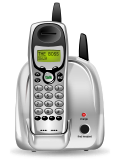 Cordless phone
 -
 Garage door opener remote
 -
 Wireless network
 -
 Bluetooth headset
 -
 Dipole transmitting antenna
 -
 Heinrich Hertz discovering radio waves
 -
 Marconi's spark gap transmitter
 -
 Powerful spark gap transmitter
 -
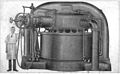 Poulsen arc transmitter
 -
 Alexanderson alternator
 -
 First vacuum tube AM radio transmitter
 -
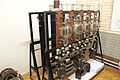 Blythe House Science Museum
 -
 Armstrong's FM transmitter prototype
 -
 Magnetron radar assembly


.jpg)


