Vehicle extrication: Difference between revisions
CSV import Tags: mobile edit mobile web edit |
CSV import |
||
| Line 1: | Line 1: | ||
{{Short description|Process of removing a vehicle from around a person who has been involved in a crash}} | |||
{{Use dmy dates|date=October 2023}} | |||
'''Vehicle extrication''' is the process of removing a vehicle from around a person who has been involved in a [[motor vehicle accident]], when conventional means of exit are impossible or inadvisable. This process is typically carried out by [[emergency services]] such as [[firefighters]], [[paramedics]], and [[police]]. | |||
== | ==Process== | ||
Vehicle extrication involves several steps, which may vary depending on the situation and the condition of the vehicle and the patient. The primary goal is to safely remove the patient while minimizing further injury. | |||
== | ===Assessment=== | ||
The first step in vehicle extrication is the assessment of the scene. Emergency responders evaluate the stability of the vehicle, the condition of the patient, and any potential hazards such as leaking fuel or electrical risks. This assessment helps determine the best approach for extrication. | |||
== | ===Stabilization=== | ||
Stabilization of the vehicle is crucial to prevent any movement that could cause further injury to the patient or responders. This may involve using chocks, cribbing, or other stabilization tools to secure the vehicle in place. | |||
== | ===Access=== | ||
Once the vehicle is stabilized, responders gain access to the patient. This may involve breaking windows, removing doors, or cutting through the vehicle's structure using specialized tools such as the [[Jaws of Life]]. | |||
== | ===Patient Care=== | ||
Throughout the extrication process, patient care is a priority. Paramedics or emergency medical technicians (EMTs) provide medical support, including [[spinal immobilization]] and [[oxygen therapy]], to stabilize the patient before and during removal. | |||
===Extrication=== | |||
The final step is the actual extrication of the patient from the vehicle. This is done carefully to avoid exacerbating any injuries. Once the patient is free, they are transported to a medical facility for further treatment. | |||
{{ | ==Tools and Equipment== | ||
Vehicle extrication requires a variety of tools and equipment, including: | |||
* Hydraulic rescue tools (e.g., spreaders, cutters, and rams) | |||
* Glass management tools | |||
* Stabilization devices | |||
* Personal protective equipment (PPE) for responders | |||
==Training== | |||
Emergency responders undergo extensive training in vehicle extrication techniques. This training includes understanding vehicle construction, using extrication tools, and providing medical care during the extrication process. | |||
==Images== | |||
<gallery> | |||
File:Car_crash_1_(cropped).jpg|A car crash scene requiring extrication. | |||
File:SV-RTL_In_Action_(16500296669).jpg|Firefighters using hydraulic tools during an extrication. | |||
File:Extrication_exercise_by_firefighters_from_Paris_2024_(20).jpg|Firefighters conducting an extrication exercise. | |||
File:Crashed_Renault_Kangoo_(3).jpg|A crashed vehicle requiring extrication. | |||
File:Iceman_in_action_150306-F-YW474-181.jpg|Emergency responders in action during an extrication. | |||
File:Extrication_exercise_(1).jpg|Training exercise for vehicle extrication. | |||
File:Paramedics_extract_a_patient_in_a_car_accident.jpg|Paramedics extracting a patient from a vehicle. | |||
</gallery> | |||
==Related pages== | |||
* [[Emergency medical services]] | |||
* [[Firefighting]] | |||
* [[Road traffic safety]] | |||
==References== | |||
{{Reflist}} | |||
[[Category:Emergency services]] | |||
[[Category:Rescue]] | |||
[[Category:Road safety]] | |||
Revision as of 00:35, 10 February 2025
Vehicle extrication is the process of removing a vehicle from around a person who has been involved in a motor vehicle accident, when conventional means of exit are impossible or inadvisable. This process is typically carried out by emergency services such as firefighters, paramedics, and police.
Process
Vehicle extrication involves several steps, which may vary depending on the situation and the condition of the vehicle and the patient. The primary goal is to safely remove the patient while minimizing further injury.
Assessment
The first step in vehicle extrication is the assessment of the scene. Emergency responders evaluate the stability of the vehicle, the condition of the patient, and any potential hazards such as leaking fuel or electrical risks. This assessment helps determine the best approach for extrication.
Stabilization
Stabilization of the vehicle is crucial to prevent any movement that could cause further injury to the patient or responders. This may involve using chocks, cribbing, or other stabilization tools to secure the vehicle in place.
Access
Once the vehicle is stabilized, responders gain access to the patient. This may involve breaking windows, removing doors, or cutting through the vehicle's structure using specialized tools such as the Jaws of Life.
Patient Care
Throughout the extrication process, patient care is a priority. Paramedics or emergency medical technicians (EMTs) provide medical support, including spinal immobilization and oxygen therapy, to stabilize the patient before and during removal.
Extrication
The final step is the actual extrication of the patient from the vehicle. This is done carefully to avoid exacerbating any injuries. Once the patient is free, they are transported to a medical facility for further treatment.
Tools and Equipment
Vehicle extrication requires a variety of tools and equipment, including:
- Hydraulic rescue tools (e.g., spreaders, cutters, and rams)
- Glass management tools
- Stabilization devices
- Personal protective equipment (PPE) for responders
Training
Emergency responders undergo extensive training in vehicle extrication techniques. This training includes understanding vehicle construction, using extrication tools, and providing medical care during the extrication process.
Images
-
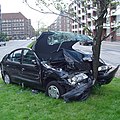 A car crash scene requiring extrication.
 -
 Firefighters using hydraulic tools during an extrication.
 -
 Firefighters conducting an extrication exercise.
 -
 A crashed vehicle requiring extrication.
 -
 Emergency responders in action during an extrication.
 -
 Training exercise for vehicle extrication.
 -
 Paramedics extracting a patient from a vehicle.
.jpg)
.jpg)
.jpg)
.jpg)

.jpg)

