Underwater archaeology: Difference between revisions
CSV import |
CSV import |
||
| Line 1: | Line 1: | ||
'''Underwater archaeology''' is the study of human interaction with the sea, lakes and rivers through the | == Underwater Archaeology == | ||
[[File:Scale_drawing_underwater.jpg|thumb|right|Underwater archaeologists creating a scale drawing of a site.]] | |||
'''Underwater archaeology''' is the study of human interaction with the sea, lakes, and rivers through the investigation of submerged sites, vessels, and landscapes. It is a branch of [[archaeology]] that requires specialized techniques and equipment to explore and document sites that are located underwater. | |||
== History == | == History == | ||
The | The origins of underwater archaeology can be traced back to the early 20th century, with the development of [[scuba diving]] technology. The first significant underwater archaeological excavation was conducted in the 1960s at the [[Antikythera wreck]], a Roman shipwreck off the coast of Greece. Since then, the field has expanded significantly, with numerous projects around the world exploring shipwrecks, submerged settlements, and other underwater sites. | ||
== | == Techniques == | ||
Underwater | Underwater archaeologists use a variety of methods to locate and study sites. These include remote sensing techniques such as [[side-scan sonar]], [[sub-bottom profiling]], and [[magnetometry]]. Once a site is located, divers may use underwater photography, video, and drawing to document the site. Excavation underwater is more challenging than on land due to factors such as visibility, currents, and the need for specialized equipment. | ||
== Notable Sites | == Notable Sites == | ||
[[File:LakeMurray_rockhouse_overview.jpg|thumb|right|Overview of a submerged rock house in Lake Murray.]] | |||
Some of the most famous underwater archaeological sites include the [[Titanic]], the [[Mary Rose]], and the [[Uluburun shipwreck]]. Each of these sites has provided valuable insights into historical shipbuilding, trade, and daily life. | |||
== Challenges == | == Challenges == | ||
Underwater archaeology faces | Underwater archaeology faces several challenges, including the preservation of artifacts, which can deteriorate rapidly once removed from the water. Additionally, the cost and complexity of underwater excavations can be prohibitive. Legal and ethical issues also arise, particularly concerning the ownership and protection of underwater cultural heritage. | ||
== | == Related Pages == | ||
* [[Maritime archaeology]] | * [[Maritime archaeology]] | ||
* [[ | * [[Shipwreck]] | ||
* [[ | * [[Scuba diving]] | ||
* [[ | * [[Marine biology]] | ||
== Gallery == | |||
<gallery> | |||
File:Kaubalaeva_"E._Russ"_vrakk.jpg|The wreck of the "E. Russ". | |||
File:Laevavrakk_"Aid".png|The wreck of the "Aid". | |||
File:Diver&shipsbell.jpg|A diver with a ship's bell. | |||
</gallery> | |||
== References == | == References == | ||
* Bass, George F. "A Plea for a Lost Art." ''Archaeology'' 13, no. 2 (1960): 87-92. | |||
* Muckelroy, Keith. ''Maritime Archaeology''. Cambridge University Press, 1978. | |||
* Delgado, James P. ''Lost Warships: An Archaeological Tour of War at Sea''. Checkmark Books, 2001. | |||
[[Category:Archaeology]] | [[Category:Archaeology]] | ||
[[Category:Underwater archaeology]] | [[Category:Underwater archaeology]] | ||
Revision as of 00:00, 10 February 2025
Underwater Archaeology

Underwater archaeology is the study of human interaction with the sea, lakes, and rivers through the investigation of submerged sites, vessels, and landscapes. It is a branch of archaeology that requires specialized techniques and equipment to explore and document sites that are located underwater.
History
The origins of underwater archaeology can be traced back to the early 20th century, with the development of scuba diving technology. The first significant underwater archaeological excavation was conducted in the 1960s at the Antikythera wreck, a Roman shipwreck off the coast of Greece. Since then, the field has expanded significantly, with numerous projects around the world exploring shipwrecks, submerged settlements, and other underwater sites.
Techniques
Underwater archaeologists use a variety of methods to locate and study sites. These include remote sensing techniques such as side-scan sonar, sub-bottom profiling, and magnetometry. Once a site is located, divers may use underwater photography, video, and drawing to document the site. Excavation underwater is more challenging than on land due to factors such as visibility, currents, and the need for specialized equipment.
Notable Sites

Some of the most famous underwater archaeological sites include the Titanic, the Mary Rose, and the Uluburun shipwreck. Each of these sites has provided valuable insights into historical shipbuilding, trade, and daily life.
Challenges
Underwater archaeology faces several challenges, including the preservation of artifacts, which can deteriorate rapidly once removed from the water. Additionally, the cost and complexity of underwater excavations can be prohibitive. Legal and ethical issues also arise, particularly concerning the ownership and protection of underwater cultural heritage.
Related Pages
Gallery
-
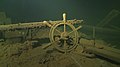 The wreck of the "E. Russ".
 -
 The wreck of the "Aid".
 -
 A diver with a ship's bell.


References
- Bass, George F. "A Plea for a Lost Art." Archaeology 13, no. 2 (1960): 87-92.
- Muckelroy, Keith. Maritime Archaeology. Cambridge University Press, 1978.
- Delgado, James P. Lost Warships: An Archaeological Tour of War at Sea. Checkmark Books, 2001.
