Radiography: Difference between revisions
CSV import |
CSV import |
||
| Line 24: | Line 24: | ||
[[Category:Radiography]] | [[Category:Radiography]] | ||
{{stub}} | {{stub}} | ||
<gallery> | |||
File:Xraymachine.JPG|Radiography | |||
File:Рентген черепа.jpg|Radiography | |||
File:Crookes tube xray experiment.jpg|Radiography | |||
File:First medical X-ray by Wilhelm Röntgen of his wife Anna Bertha Ludwig's hand - 18951222.jpg|Radiography | |||
File:James Green|Radiography | |||
File:Projectional radiography components.jpg|Radiography | |||
File:Ct-workstation-neck.jpg|Radiography | |||
File:Cerebral angiography, arteria vertebralis sinister injection.JPG|Radiography | |||
File:Darwinius radiographs.jpg|Radiography | |||
File:Coude fp.PNG|Radiography | |||
File:AP lumbar xray.jpg|Radiography | |||
File:Hand Xray (48630648876).jpg|Radiography | |||
</gallery> | |||
<gallery> | <gallery> | ||
File:Xraymachine.JPG|Radiography | File:Xraymachine.JPG|Radiography | ||
Revision as of 01:51, 20 February 2025
Radiography is an imaging technique using X-rays, gamma rays, or similar ionizing radiation and non-ionizing radiation to view the internal form of an object. Applications of radiography include medical imaging and industrial radiography.
History
Radiography's origins can be traced back to Wilhelm Conrad Röntgen's discovery of X-rays in 1895. Röntgen discovered that X-rays could be used to create images of the internal structures of the body, which led to their use in medical imaging.
Types
There are two main types of radiography: Projectional radiography and Computed tomography. Projectional radiography is the type of radiography that most people are familiar with, as it is commonly used in hospitals and medical facilities. Computed tomography, on the other hand, uses a computer to create a three-dimensional image of the inside of an object from a large series of two-dimensional X-ray images taken around a single axis of rotation.
Applications
Radiography has a wide range of applications in the medical field. It is used to diagnose and treat a variety of conditions, including cancer, heart disease, and bone fractures. In addition, it is also used in the industrial field to inspect materials for internal defects.
Risks
While radiography is a valuable tool in the diagnosis and treatment of many conditions, it does carry some risks. The main risk associated with radiography is exposure to ionizing radiation, which can cause radiation sickness and increase the risk of cancer.
See also
References
<references />
 | |
|---|---|
 |
 |
-
 Radiography
 -
 Radiography
 -
 Radiography
 -
 Radiography
 -
Radiography
-
 Radiography
 -
 Radiography
 -
 Radiography
 -
 Radiography
 -
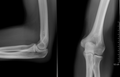 Radiography
 -
 Radiography
 -
 Radiography


.jpg)
-
Radiography
-
Radiography
-
Radiography
-
Radiography
-
Radiography
-
Radiography
-
Radiography
-
Radiography
-
Radiography
-
Radiography
-
Radiography
-
Radiography
