Smoker's melanosis: Difference between revisions
CSV import Tags: mobile edit mobile web edit |
CSV import |
||
| Line 29: | Line 29: | ||
[[Category:Oral pathology]] | [[Category:Oral pathology]] | ||
[[Category:Tobacco-related diseases]] | [[Category:Tobacco-related diseases]] | ||
<gallery> | |||
File:Smoker's melanosis.jpg|Smoker's melanosis | |||
File:Smokers melanosis.jpg|Smoker's melanosis | |||
File:Smoker milanosis.jpg|Smoker's melanosis | |||
</gallery> | |||
Revision as of 01:25, 20 February 2025
A condition characterized by pigmentation changes in the oral mucosa due to smoking
Smoker's melanosis is a benign condition characterized by increased pigmentation of the oral mucosa, particularly in individuals who smoke tobacco. This condition is most commonly observed in the gingiva, buccal mucosa, and palate.
Pathophysiology
Smoker's melanosis is believed to result from the stimulation of melanocytes by the components of tobacco smoke. Nicotine and other chemicals in tobacco can lead to increased production of melanin, the pigment responsible for the coloration of the skin and mucous membranes. The increased melanin production is a protective response to the irritants in tobacco smoke.
Clinical Presentation
The condition is characterized by brown to black pigmentation of the oral mucosa. The pigmentation is usually diffuse and symmetric, affecting areas such as the anterior labial gingiva, buccal mucosa, and the hard palate. The degree of pigmentation can vary depending on the amount and duration of tobacco use.
Diagnosis
Diagnosis of smoker's melanosis is primarily clinical, based on the patient's history of tobacco use and the characteristic appearance of the oral mucosa. A biopsy is rarely needed but may be performed to rule out other pigmented lesions such as oral melanotic macule or melanoma.
Management
The primary management of smoker's melanosis involves cessation of smoking. Upon quitting smoking, the pigmentation often fades over time, although this process can take several months to years. There is no specific treatment required for smoker's melanosis itself, as it is a benign condition.
Prognosis
Smoker's melanosis is a benign condition with no malignant potential. However, it serves as an indicator of tobacco use, which is a risk factor for various oral and systemic diseases, including oral cancer.
Prevention
The most effective way to prevent smoker's melanosis is to avoid tobacco use. Smoking cessation programs and interventions can help individuals quit smoking and reduce the risk of developing smoker's melanosis and other tobacco-related conditions.
Related pages
-
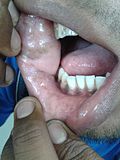 Smoker's melanosis
 -
Smoker's melanosis
-
 Smoker's melanosis


