Colipase: Difference between revisions
CSV import |
CSV import Tags: mobile edit mobile web edit |
||
| Line 29: | Line 29: | ||
[[Category:Enzymes]] | [[Category:Enzymes]] | ||
[[Category:Proteins]] | [[Category:Proteins]] | ||
== Colipase == | |||
<gallery> | |||
File:PDB_1lpb_EBI.jpg|PDB 1lpb EBI | |||
File:PDB_1pcn_EBI.jpg|PDB 1pcn EBI | |||
</gallery> | |||
Latest revision as of 00:28, 27 February 2025
A cofactor for pancreatic lipase
Colipase is a protein cofactor essential for the optimal activity of pancreatic lipase, the enzyme responsible for the digestion of dietary lipids in the small intestine.
Structure[edit]
Colipase is a small protein, typically consisting of 100 amino acids, and is secreted by the pancreas in an inactive form known as procolipase. Upon activation by the removal of a short peptide, colipase binds to pancreatic lipase, forming a complex that enhances the enzyme's ability to hydrolyze triglycerides into fatty acids and monoglycerides.
Function[edit]
The primary function of colipase is to anchor pancreatic lipase to the surface of lipid droplets in the presence of bile salts. Bile salts, which are secreted by the liver and stored in the gallbladder, emulsify dietary fats, increasing their surface area and making them more accessible to lipase. However, bile salts can also inhibit lipase activity by displacing it from the lipid-water interface. Colipase counteracts this inhibition by binding to both lipase and the lipid interface, thereby stabilizing the enzyme and allowing it to function effectively.
Mechanism of Action[edit]
Colipase binds to a specific site on pancreatic lipase, inducing a conformational change that enhances the enzyme's affinity for the lipid-water interface. This interaction is crucial for the digestion of dietary fats, as it allows lipase to access and hydrolyze the ester bonds of triglycerides. The colipase-lipase complex is highly efficient, capable of processing large amounts of dietary fat in a relatively short period.
Clinical Significance[edit]
Deficiencies in colipase or pancreatic lipase can lead to malabsorption of dietary fats, resulting in conditions such as steatorrhea, where excess fat is present in the stool. This can lead to deficiencies in fat-soluble vitamins (A, D, E, and K) and essential fatty acids, impacting overall health. Understanding the role of colipase in fat digestion is crucial for diagnosing and treating such malabsorption disorders.
Research and Developments[edit]
Recent studies have focused on the potential therapeutic applications of colipase in treating conditions related to fat malabsorption. Advances in biotechnology have enabled the production of recombinant colipase, which may be used to supplement pancreatic enzyme replacement therapies in individuals with pancreatic insufficiency.
Related pages[edit]
Colipase[edit]
-
 PDB 1lpb EBI
 -
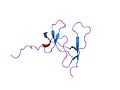 PDB 1pcn EBI


