Brook General Hospital: Difference between revisions
CSV import |
CSV import |
||
| Line 21: | Line 21: | ||
{{hospital-stub}} | {{hospital-stub}} | ||
<gallery> | <gallery> | ||
File:The_Brook_(Fever)_Hospital_at_Shooters_Hill._Wellcome_L0006810EA.jpg|The Brook (Fever) Hospital at Shooters Hill | |||
</gallery> | |||
<gallery> | |||
File:Converted_Water_Tower,_former_Brook_Hospital_-_geograph.org.uk_-_19608.jpg|Converted Water Tower, former Brook Hospital | |||
File:The_Brook_(Fever)_Hospital_at_Shooters_Hill._Wellcome_L0006810EA.jpg|The Brook (Fever) Hospital at Shooters Hill | File:The_Brook_(Fever)_Hospital_at_Shooters_Hill._Wellcome_L0006810EA.jpg|The Brook (Fever) Hospital at Shooters Hill | ||
</gallery> | </gallery> | ||
Latest revision as of 01:53, 18 February 2025
Brook General Hospital was a significant medical facility located in the United Kingdom, known for its comprehensive healthcare services and contributions to medical research and education. Established in the 19th century, it played a pivotal role in the development of modern medical practices and served as a cornerstone in the community's health infrastructure until its closure.
History[edit]
The foundation of Brook General Hospital dates back to the mid-1800s, during a period of rapid urbanization and public health reform. Recognizing the urgent need for improved medical facilities, philanthropists and medical professionals collaborated to establish the hospital. It was designed to accommodate the growing population's health needs, offering a wide range of medical services and specializing in several areas of medicine.
Throughout its operation, the hospital underwent numerous expansions and renovations to incorporate the latest medical technologies and accommodate the increasing demand for healthcare services. It was renowned for its pioneering work in various medical fields, including surgery, infectious diseases, and public health.
Facilities and Services[edit]
Brook General Hospital boasted state-of-the-art facilities, including multiple specialized departments such as cardiology, neurology, and orthopedics. It also housed advanced diagnostic equipment, enabling the hospital to provide comprehensive care and conduct groundbreaking medical research.
The hospital was committed to education and training, hosting a nursing school and offering residency programs for medical graduates. This focus on education helped to foster the next generation of healthcare professionals and contributed to the hospital's reputation as a center of excellence in medical education and research.
Closure[edit]
Despite its historical significance and contributions to healthcare, Brook General Hospital was eventually closed. The decision to close the facility was influenced by various factors, including financial challenges, changes in healthcare policy, and the development of more modern healthcare facilities in the region. The closure marked the end of an era but also paved the way for the redistribution of resources to newer, more advanced medical institutions.
Legacy[edit]
The legacy of Brook General Hospital lives on through its contributions to medical science and the healthcare professionals it trained. Many of its former staff members have gone on to make significant contributions to medicine, and its influence can still be seen in the practices and policies of contemporary healthcare institutions.

-
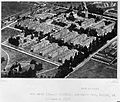 The Brook (Fever) Hospital at Shooters Hill
_Hospital_at_Shooters_Hill._Wellcome_L0006810EA.jpg)
-
 Converted Water Tower, former Brook Hospital
 -
The Brook (Fever) Hospital at Shooters Hill

