Viola adunca: Difference between revisions
CSV import |
CSV import |
||
| Line 23: | Line 23: | ||
File:Viola_adunca_5819.JPG | File:Viola_adunca_5819.JPG | ||
File:Viola_adunca_1123.JPG | File:Viola_adunca_1123.JPG | ||
</gallery> | |||
<gallery> | |||
File:Viola_adunca_5819.JPG|Viola adunca 5819 | |||
File:Viola_adunca_1123.JPG|Viola adunca 1123 | |||
</gallery> | </gallery> | ||
Revision as of 11:49, 25 February 2025
Viola adunca, also known as the Hookedspur violet, Early blue violet, Sand violet, or the Western dog violet, is a species of violet native to North America. It is a perennial herb of the family Violaceae, which includes about 400-500 species worldwide.
Description
Viola adunca is a small plant that typically grows up to 10 cm tall. The leaves are heart-shaped, with a rounded or slightly pointed tip. The flowers are violet-blue, with a white center and dark veins. The spur, which gives the plant its name, is hooked or curved.
Distribution and Habitat
Viola adunca is widely distributed across North America, from Alaska to California, and east to the Atlantic coast. It is found in a variety of habitats, including meadows, open woods, and sandy or rocky areas. It is particularly common in disturbed sites, such as roadsides and pastures.
Cultivation and Uses
Viola adunca is cultivated as a garden plant for its attractive flowers. It is also used in traditional medicine by several Native American tribes, who use it to treat a variety of ailments.
Conservation Status
While Viola adunca is not currently considered threatened, its habitat is being lost to development and other human activities. Conservation efforts are focused on preserving its habitat and promoting its cultivation.
See Also

This flora-related article is a stub. You can help WikiMD by expanding it.


-
 Viola adunca 5819
 -
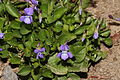 Viola adunca 1123
