Goods: Difference between revisions
CSV import |
CSV import |
||
| Line 39: | Line 39: | ||
= Goods = | = Goods = | ||
<gallery> | |||
File:Mediq_Sverige_Kungsbacka_warehouse.jpg|Mediq Sverige Kungsbacka warehouse | |||
File:Types_of_goods.svg|Types of goods | |||
</gallery> | |||
==Goods== | |||
<gallery> | <gallery> | ||
File:Mediq_Sverige_Kungsbacka_warehouse.jpg|Mediq Sverige Kungsbacka warehouse | File:Mediq_Sverige_Kungsbacka_warehouse.jpg|Mediq Sverige Kungsbacka warehouse | ||
File:Types_of_goods.svg|Types of goods | File:Types_of_goods.svg|Types of goods | ||
</gallery> | </gallery> | ||
Revision as of 00:42, 18 February 2025
Goods are items that satisfy human wants and provide utility, for example, to a consumer making a purchase of a satisfying product. In economics, goods are materials that satisfy human wants and provide utility, for example, to a consumer making a purchase. A good may be a tangible product such as a chair, a book, or an apple. Alternatively, goods can also be intangible such as services provided by a barber, a doctor, or by the carrier of a telecommunication service. The distinction between tangible and intangible goods leads to the identification of two major categories of goods: physical goods and services.
Types of Goods
Goods can be categorized in several ways. One common way to categorize them is based on their excludability and rivalry in consumption.
Public Goods
Public goods are non-excludable and non-rivalrous. This means that individuals cannot be effectively excluded from use, and use by one individual does not reduce availability to others. Examples include lighthouses, national defense, and public parks.
Private Goods
Private goods are both excludable and rivalrous. The consumption of these goods by one individual prevents others from using them, and they can be excluded from using them through prices, physical restrictions, and other means. Examples include food, clothing, and cars.
Common Goods
Common goods (or common-pool resources) are rivalrous but non-excludable. These goods can be used up or depleted by one user, but it is difficult to exclude others from using them. Examples include fish stocks, timber, and clean water.
Club Goods
Club goods (or artificially scarce resources) are excludable but non-rivalrous. These goods can be accessed by people who pay for them, and one person's use does not diminish the ability of another person to use them. Examples include cable television, private parks, and satellite television.
Characteristics of Goods
Goods have various characteristics that define their utility and value. These include:
- Durability: Goods can be durable, which means they last for a long time, or non-durable, which means they are consumed quickly.
- Tangibility: Goods can be tangible, which means they have a physical presence, or intangible, such as services.
- Excludability: This refers to the degree to which a good can be restricted to paying customers.
- Rivalry in consumption: This refers to whether one person's consumption of a good reduces the ability of others to consume it.
Economic Role of Goods
Goods play a central role in the economy as they are the primary means through which needs and wants are satisfied. The production, distribution, and consumption of goods drive economic activity and are fundamental to the operation of markets. The study of how goods are produced, distributed, and consumed is a key focus of economics.
See Also

Goods
-
 Mediq Sverige Kungsbacka warehouse
 -
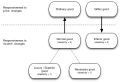 Types of goods


Goods
-
Mediq Sverige Kungsbacka warehouse
-
Types of goods
