Garcinia dulcis: Difference between revisions
CSV import |
|||
| Line 46: | Line 46: | ||
[[Category:Medicinal plants]] | [[Category:Medicinal plants]] | ||
{{nt}} | {{nt}} | ||
<gallery> | |||
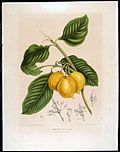
File:COLLECTIE_TROPENMUSEUM_Blad_en_vrucht_van_de_Xanthochymus_dulcis_roxb_moendoe_TMnr_3401-1683.jpg|Garcinia dulcis | |||
</gallery> | |||
Revision as of 21:41, 20 February 2025
Garcinia Dulcis
Garcinia dulcis, commonly known as mundu, is a tropical fruit tree native to Southeast Asia. It belongs to the family Clusiaceae and is a species of the genus Garcinia. The tree is also known by various other names such as rambutan and maphuut in different regions.
Description
The Garcinia dulcis tree is a medium-sized evergreen tree that can reach a height of up to 20 meters. It has a dense crown with glossy, dark green leaves that are elliptical in shape. The tree produces small, round fruits that are approximately 3-5 centimeters in diameter. The fruit has a thin, smooth skin that turns from green to yellow when ripe. The flesh of the fruit is translucent and juicy, with a sweet and tangy flavor.
Cultivation and Uses
Garcinia dulcis is primarily cultivated for its edible fruits. The fruit is commonly consumed fresh and is also used in various culinary preparations such as jams, jellies, and desserts. The sweet and tangy flavor of the fruit makes it a popular ingredient in tropical fruit salads and smoothies.
The tree is relatively easy to grow and thrives in tropical and subtropical climates. It prefers well-drained soil and requires regular watering. Garcinia dulcis trees can be propagated through seeds or by grafting.
Medicinal Properties
Garcinia dulcis is known for its medicinal properties. The fruit is rich in antioxidants, vitamins, and minerals, making it beneficial for overall health. It is believed to have anti-inflammatory and anti-cancer properties. The fruit is also used in traditional medicine to treat various ailments such as diarrhea, dysentery, and skin infections.
Conservation Status
Garcinia dulcis is not currently listed as a threatened species. However, like many other tropical fruit trees, its natural habitat is being threatened by deforestation and habitat loss. Efforts are being made to conserve and protect the species to ensure its long-term survival.
See also
-
 Garcinia dulcis

