Unix: Difference between revisions
CSV import |
CSV import |
||
| Line 63: | Line 63: | ||
[[Category:Unix]] | [[Category:Unix]] | ||
<gallery> | |||
File:UNIX_logo.svg|UNIX Logo | |||
File:Version_7_Unix_SIMH_PDP11_Emulation_DMR.png|Version 7 Unix SIMH PDP-11 Emulation | |||
File:CDE_2012_on_Linux.png|CDE 2012 on Linux | |||
File:Ken_Thompson_and_Dennis_Ritchie.jpg|Ken Thompson and Dennis Ritchie | |||
File:Usenix84_1.jpg|Usenix 1984 | |||
File:Debian_6.0_Console_Login.png|Debian 6.0 Console Login | |||
File:FreeBSD_9.1_Console_Login.png|FreeBSD 9.1 Console Login | |||
File:UNIX-Licence-Plate.JPG|UNIX License Plate | |||
File:HP-HP9000-C110-Workstation_10.jpg|HP 9000 C110 Workstation | |||
</gallery> | |||
Latest revision as of 11:25, 18 February 2025
Unix[edit]

Unix (officially trademarked as UNIX) is a family of multitasking, multiuser computer operating systems that derive from the original AT&T Unix developed in the 1970s at the Bell Labs research center by Ken Thompson, Dennis Ritchie, and others. Initially intended for use inside Bell Labs, Unix was later licensed to outside parties, leading to a wide variety of both academic and commercial versions.
History[edit]

Unix was first developed in the 1960s and 1970s at AT&T's Bell Labs research center. The initial version was written in assembly language, but by 1973, it was rewritten in the C programming language, which was also developed at Bell Labs. This made Unix portable across different machines, a significant advantage at the time.
In 1974, Unix was licensed to academic institutions, and the University of California, Berkeley became a significant contributor to its development, leading to the Berkeley Software Distribution (BSD) versions of Unix.
Features[edit]
Unix is known for its simplicity, portability, and powerful command-line interface. It supports multitasking and multiuser capabilities, allowing multiple users to access the system simultaneously. Unix systems are characterized by a modular design that includes small, simple utilities that can be combined in scripts to perform complex tasks.
Variants[edit]
Over the years, many different versions of Unix have been developed. Some of the most notable include:

Influence and Legacy[edit]
Unix has had a profound influence on the development of many other operating systems, including Linux, which is a Unix-like system. The POSIX standard was developed to ensure compatibility between Unix systems and Unix-like systems.

Modern Unix Systems[edit]
Today, Unix systems are used in a variety of environments, from servers to workstations. Some modern Unix systems include:
- macOS, developed by Apple Inc.
- AIX, developed by IBM
- HP-UX, developed by Hewlett-Packard

Related pages[edit]
References[edit]
- Salus, Peter H. (1994). "A Quarter Century of UNIX". Addison-Wesley. ISBN 0-201-54777-5.
- Ritchie, Dennis M. (1984). "The Evolution of the Unix Time-sharing System". AT&T Bell Laboratories Technical Journal.
External links[edit]
-
 UNIX Logo
 -
 Version 7 Unix SIMH PDP-11 Emulation
 -
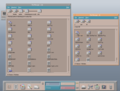 CDE 2012 on Linux
 -
 Ken Thompson and Dennis Ritchie
 -
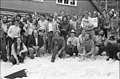 Usenix 1984
 -
 Debian 6.0 Console Login
 -
 FreeBSD 9.1 Console Login
 -
 UNIX License Plate
 -
 HP 9000 C110 Workstation


