Leftovers: Difference between revisions
CSV import |
CSV import |
||
| Line 40: | Line 40: | ||
{{Food-stub}} | {{Food-stub}} | ||
<gallery> | |||
File:Leftovers from Thanksgiving.jpg|Leftovers from Thanksgiving | |||
File:Hot and Spicy Leftovers.jpg|Hot and Spicy Leftovers | |||
File:Leftovers-food.jpg|Leftovers food | |||
</gallery> | |||
Latest revision as of 01:14, 20 February 2025


Leftovers are the uneaten edible remains of a meal after the meal is over and everyone has finished eating. They are typically stored in refrigerators or freezers and are eaten later. Leftovers can include cooked food, raw food, and partially prepared food.
Storage[edit]
Proper storage of leftovers is crucial to prevent foodborne illness. Leftovers should be stored in airtight containers to maintain freshness and prevent contamination. It is recommended to refrigerate leftovers within two hours of cooking to minimize the risk of bacterial growth.
Reheating[edit]
When reheating leftovers, it is important to ensure that the food reaches an internal temperature of 165°F (74°C) to kill any harmful bacteria. Methods of reheating include using a microwave oven, oven, or stovetop.
Culinary Uses[edit]
Leftovers can be repurposed into new dishes, reducing food waste and providing convenient meal options. Common practices include:
- Making soups or stews from leftover meats and vegetables.
- Creating sandwiches or wraps with leftover proteins.
- Using leftover rice or pasta in stir-fries or casseroles.
Cultural Practices[edit]
Different cultures have unique ways of dealing with leftovers. In some cultures, it is customary to transform leftovers into entirely new dishes, while in others, leftovers are simply reheated and eaten as they are.
Related Health Concerns[edit]
Improper handling and storage of leftovers can lead to food poisoning. It is important to follow food safety guidelines to ensure that leftovers are safe to eat.
Environmental Impact[edit]
Reducing food waste by consuming leftovers can have a positive impact on the environment. It helps in minimizing the amount of food that ends up in landfills, thereby reducing greenhouse gas emissions associated with food decomposition.
See Also[edit]
Related Pages[edit]

-
 Leftovers from Thanksgiving
 -
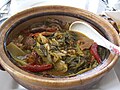 Hot and Spicy Leftovers
 -
 Leftovers food

