Mesothelin: Difference between revisions
CSV import |
CSV import |
||
| Line 33: | Line 33: | ||
{{medicine-stub}} | {{medicine-stub}} | ||
== Mesothelin == | |||
<gallery> | |||
File:Mesothelin.tif|Mesothelin | |||
</gallery> | |||
Latest revision as of 21:30, 23 February 2025

Mesothelin is a protein that in humans is encoded by the MSLN gene. It is a cell surface glycoprotein that is highly expressed in several types of cancer, including mesothelioma, ovarian cancer, and pancreatic cancer. Mesothelin is involved in cell adhesion and may play a role in the spread of cancer cells.
Structure[edit]
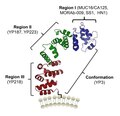
Mesothelin is synthesized as a 69-kDa precursor protein that is cleaved to yield a 40-kDa fragment, which remains attached to the cell membrane, and a 31-kDa fragment, known as megakaryocyte potentiating factor (MPF), which is secreted. The membrane-bound form of mesothelin is a glycosylphosphatidylinositol (GPI)-anchored protein.
Function[edit]
The exact physiological function of mesothelin is not fully understood. However, it is believed to play a role in cell adhesion and may be involved in the interaction between tumor cells and the mesothelium. Mesothelin has been shown to bind to MUC16, also known as CA-125, which is a marker for ovarian cancer.
Clinical Significance[edit]
Mesothelin is overexpressed in several types of cancer, making it a potential target for cancer therapy. It is being investigated as a target for immunotherapy, including monoclonal antibodies, chimeric antigen receptor T-cell therapy (CAR-T), and antibody-drug conjugates. Mesothelin is also being studied as a biomarker for the diagnosis and prognosis of certain cancers.
Research and Development[edit]
Several clinical trials are ongoing to evaluate the efficacy of mesothelin-targeted therapies. These include the use of amphiphilic peptides, vaccines, and small molecule inhibitors.
See Also[edit]
References[edit]
<references group="" responsive="1"></references>
External Links[edit]


Mesothelin[edit]
-
 Mesothelin
