Philippine Coconut Authority: Difference between revisions
CSV import Tags: mobile edit mobile web edit |
CSV import |
||
| Line 35: | Line 35: | ||
[[Category:Government agencies of the Philippines]] | [[Category:Government agencies of the Philippines]] | ||
[[Category:Agriculture in the Philippines]] | [[Category:Agriculture in the Philippines]] | ||
==Philippine Coconut Authority== | |||
<gallery> | |||
File:05957jfQuezon_Memorial_Authority_Elliptical_Road_Quezon_Cityfvf_24.JPG|Quezon Memorial Authority Elliptical Road Quezon City | |||
File:Dexter_Respicio_Buted_Cristina_Aldeguer-Roque2.jpg|Dexter Respicio Buted Cristina Aldeguer-Roque | |||
</gallery> | |||
Latest revision as of 11:08, 25 February 2025

Philippine Coconut Authority (PCA) is a government agency in the Philippines responsible for developing the coconut and other palm oil industry to its full potential in line with the new vision of a united, globally competitive and efficient coconut industry. It operates under the Department of Agriculture and is tasked with ensuring the improvement and expansion of the country's coconut industry, primarily for the benefit of coconut farmers and other stakeholders.
History[edit]
The Philippine Coconut Authority was established through Presidential Decree No. 232 on June 30, 1973, by then-President Ferdinand Marcos, in an effort to consolidate and coordinate the various functions related to the coconut industry previously handled by different government entities. Its creation aimed to support the development of the coconut industry in the Philippines, which is an essential sector of the country's agriculture.
Mandate and Functions[edit]
The PCA is mandated to promote the rapid integrated development and growth of the coconut and other palm oil industry in all its aspects, including research, production, processing, marketing, and extension services. Its functions include:
- Conducting research and development on new coconut farming techniques, pest management, and product development.
- Providing support services to coconut farmers, including training and extension work.
- Regulating the industry to ensure fair practices and protect the welfare of coconut farmers.
- Promoting the export of coconut products and exploring new markets for them.
- Ensuring the sustainability of the coconut industry through environmental conservation efforts.
Programs and Projects[edit]
The PCA implements various programs and projects aimed at enhancing the productivity and profitability of the coconut industry. These include:
- The Coconut Seedling Distribution Program, which provides high-yielding varieties of coconut seedlings to farmers.
- The Integrated Coconut Processing and Development Project, aimed at increasing the value-added of coconut products.
- The Coconut Farming and Industry Development Plan, which outlines the roadmap for the industry's growth and development.
Challenges[edit]
Despite its significant contributions, the Philippine Coconut Authority faces several challenges, including:
- The aging of coconut trees and the need for replanting with high-yielding varieties.
- Vulnerability of the coconut industry to pests and diseases.
- The fluctuating prices of coconut products in the global market, which affect the income of coconut farmers.
- The need for more research and development to create innovative coconut products and improve the competitiveness of the Philippine coconut industry.
Recent Developments[edit]
In recent years, the PCA has been involved in efforts to rehabilitate coconut farms affected by natural disasters, such as typhoons and pest infestations. It also actively participates in international forums and exhibitions to promote Philippine coconut products.
See Also[edit]
- Agriculture in the Philippines
- Coconut production in the Philippines
- Department of Agriculture (Philippines)
Philippine Coconut Authority[edit]
-
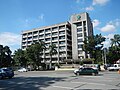 Quezon Memorial Authority Elliptical Road Quezon City
 -
 Dexter Respicio Buted Cristina Aldeguer-Roque

