Agriculture in Madagascar: Difference between revisions
CSV import Tags: mobile edit mobile web edit |
CSV import |
||
| Line 33: | Line 33: | ||
{{stb}} | {{stb}} | ||
<gallery> | |||
File:Riziere_terrasses.JPG|Riziere terrasses | |||
File:Madagascar74.031.jpg|Madagascar landscape | |||
File:Zébus_de_Madagascar_01.jpg|Zébus de Madagascar | |||
File:Malagasy_with_Zebu.jpg|Malagasy with Zebu | |||
File:Y_Coetsee_Truck_carrying_Bananas.jpg|Truck carrying Bananas | |||
File:Woman_sorting_vanilla_in_Sambava_Madagascar.jpg|Woman sorting vanilla in Sambava Madagascar | |||
File:Fish_drying_in_the_sun_poisson_seche_Madagascar.jpg|Fish drying in the sun poisson seche Madagascar | |||
File:Manantenina_bushfire.jpg|Manantenina bushfire | |||
</gallery> | |||
Latest revision as of 12:00, 25 February 2025

Agriculture in Madagascar is a pivotal sector in the Malagasy economy and a fundamental part of the country's culture and way of life. It employs the majority of the population and contributes significantly to the national GDP. The unique geography and climate of Madagascar allow for the cultivation of a wide variety of crops, both for local consumption and export.
Overview[edit]
Madagascar's agriculture is diverse, with rice being the staple food, grown by nearly every farming household. Other important crops include cassava, sweet potatoes, beans, bananas, peanuts, and maize. The country is also one of the world's leading producers of vanilla, cloves, and ylang-ylang, which are significant export crops. The agriculture sector faces numerous challenges, including periodic droughts, cyclones, and locust invasions, which can significantly impact production.
History[edit]
Agriculture has been the backbone of Madagascar's economy since the first settlers arrived from Southeast Asia around 2,000 years ago. These settlers brought with them the knowledge of rice cultivation, which has since become integral to Malagasy culture and cuisine. Over the centuries, agricultural practices have evolved to include a wide range of crops suited to the island's diverse climates and topographies.
Economic Impact[edit]
Agriculture accounts for a substantial portion of Madagascar's GDP and is the largest employer in the country. The sector provides livelihoods for approximately 80% of the population, primarily in rural areas. Export crops such as vanilla, coffee, and spices contribute significantly to the country's foreign exchange earnings. However, the sector's productivity is hampered by inadequate infrastructure, limited access to markets, and the impacts of climate change.
Challenges[edit]
Madagascar's agriculture sector faces several challenges that threaten its sustainability and productivity. These include:
- Environmental Degradation: Practices such as slash-and-burn (tavy) lead to deforestation, soil erosion, and loss of biodiversity.
- Climate Change: Increased frequency of extreme weather events, such as droughts and cyclones, disrupts agricultural production.
- Pests and Diseases: Locust invasions and crop diseases can devastate harvests, affecting food security and export revenues.
- Limited Infrastructure: Poor rural infrastructure, including roads and irrigation systems, restricts access to markets and inputs.
Sustainable Practices[edit]
To address these challenges, there is a growing emphasis on sustainable agricultural practices in Madagascar. These include:
- Agroforestry: Integrating trees into farming systems to improve soil health, increase biodiversity, and provide additional income sources.
- Conservation Agriculture: Practices that minimize soil disturbance, maintain soil cover, and rotate crops to enhance soil fertility and reduce erosion.
- Improved Rice Cultivation: Techniques such as the System of Rice Intensification (SRI) that increase yields while reducing water usage and environmental impact.
Future Directions[edit]
The future of agriculture in Madagascar hinges on the adoption of sustainable practices and the improvement of rural infrastructure. Investments in agricultural research, education, and extension services are critical to enhancing productivity and resilience to climate change. Strengthening the value chains of key crops and improving access to domestic and international markets are also essential for the sector's growth and the reduction of poverty in rural areas.
| This article is a stub. You can help WikiMD by registering to expand it. |
-
 Riziere terrasses
 -
 Madagascar landscape
 -
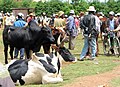 Zébus de Madagascar
 -
 Malagasy with Zebu
 -
 Truck carrying Bananas
 -
 Woman sorting vanilla in Sambava Madagascar
 -
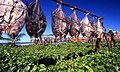 Fish drying in the sun poisson seche Madagascar
 -
 Manantenina bushfire


