Endling: Difference between revisions
CSV import |
CSV import |
||
| Line 28: | Line 28: | ||
{{biology-stub}} | {{biology-stub}} | ||
== Endling == | |||
<gallery> | |||
File:ThylacineHobart1933.jpg|Thylacine in Hobart Zoo, 1933 | |||
File:Martha_last_passenger_pigeon_1914.jpg|Martha, the last passenger pigeon, 1914 | |||
File:Dusky_Seaside_Sparrow.jpg|Dusky Seaside Sparrow | |||
File:Quagga_HIFI.jpg|Quagga | |||
File:Celia_la_última_bucardo.JPG|Celia, the last Pyrenean ibex | |||
File:Lonesome_George_(2009).jpg|Lonesome George, the last Pinta Island tortoise | |||
File:Ecnomiohyla_rabborum_2.jpg|Ecnomiohyla rabborum | |||
</gallery> | |||
Latest revision as of 11:12, 18 February 2025
Endling refers to the last known individual of a species or subspecies. Once the endling dies, the species is considered extinct. This term highlights the point at which a species is beyond the brink of recovery. The concept of an endling is significant in the fields of conservation biology, ethics, and environmental science, as it embodies the finality of extinction and the irreversible loss of biodiversity.
Overview[edit]
The term "endling" is a neologism that emerged in the late 20th century, underscoring the unique and poignant status of the last surviving member of a species. It serves as a powerful symbol of human impact on the natural world and the ultimate consequence of environmental degradation, habitat destruction, and overexploitation of species.
Historical Examples[edit]
One of the most famous endlings was the Passenger Pigeon named Martha, who died in 1914 at the Cincinnati Zoo. Her death marked the extinction of a species that once numbered in the billions in North America. Another well-known endling was Lonesome George, the last Pinta Island tortoise, who died in 2012, symbolizing the loss of his subspecies.
Conservation Implications[edit]
The concept of an endling is not only a reflection of past losses but also a stark warning for the future. It emphasizes the urgency of conservation efforts to prevent other species from reaching this point of no return. Conservationists use the stories of endlings to raise awareness about the importance of biodiversity and the need for immediate action to protect endangered species.
Ethical Considerations[edit]
The existence of an endling raises profound ethical questions about human responsibility towards other living beings and the natural world. It challenges society to consider the value of individual animals and the collective impact of human activities on the planet's biodiversity.
In Popular Culture[edit]
Endlings have also captured the public imagination and have been featured in various forms of popular culture, including literature, art, and film. These portrayals often explore themes of loss, responsibility, and the consequences of human actions on the environment.
See Also[edit]

Endling[edit]
-
 Thylacine in Hobart Zoo, 1933
 -
 Martha, the last passenger pigeon, 1914
 -
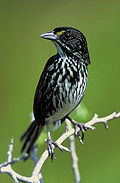 Dusky Seaside Sparrow
 -
 Quagga
 -
 Celia, the last Pyrenean ibex
 -
 Lonesome George, the last Pinta Island tortoise
 -
 Ecnomiohyla rabborum


.jpg)

