Plastic pollution: Difference between revisions
CSV import |
CSV import |
||
| Line 29: | Line 29: | ||
{{environment-stub}} | {{environment-stub}} | ||
<gallery> | |||
File:Lepidochelys_olivacea_Landaa.JPG|Lepidochelys olivacea Landaa | |||
File:Beach_in_Sharm_el-Naga03.jpg|Beach in Sharm el-Naga | |||
File:Pollution_plastique_2.jpg|Pollution plastique 2 | |||
File:Piles_of_plastic_waste_in_Thilafushi,_2012_(2).jpg|Piles of plastic waste in Thilafushi, 2012 | |||
File:Plastic_bottle_adjacent_to_hiking_trail.jpg|Plastic bottle adjacent to hiking trail | |||
File:Pathway-of-plastic-to-ocean.png|Pathway of plastic to ocean | |||
File:Beach_cleanup.jpg|Beach cleanup | |||
File:Plastic_bottle_stuck_on_edge_of_river.jpg|Plastic bottle stuck on edge of river | |||
</gallery> | |||
Latest revision as of 00:53, 27 February 2025
Plastic pollution refers to the accumulation of plastic products in the environment that adversely affects wildlife, habitat, and humans. Plastics, being non-biodegradable, are durable and persist in the environment for hundreds to thousands of years, leading to significant ecological and environmental damage. The sources of plastic pollution are varied, including industrial, commercial, and residential waste, with significant contributions from single-use plastics and improperly managed waste.
Causes[edit]
The primary cause of plastic pollution is the excessive use of single-use plastics, such as plastic bags, plastic bottles, straws, and packaging materials. These items are used briefly and then discarded, leading to accumulation in the environment. Inadequate waste management systems, lack of recycling, and public awareness contribute to the problem. Additionally, industrial processes and activities, such as the manufacturing of plastics and the breakdown of larger plastic items into microplastics, further exacerbate plastic pollution.
Effects[edit]
Plastic pollution has a wide range of negative effects on the environment and living organisms:
- Wildlife Impact: Animals, including marine and terrestrial species, can ingest or become entangled in plastic waste, leading to injury, starvation, and death.
- Ecosystem Disruption: Accumulation of plastics in ecosystems can alter habitats and negatively affect the organisms that depend on them.
- Human Health: Microplastics and plastic chemicals, such as Bisphenol A (BPA), can enter the human body through the consumption of contaminated water and food, potentially leading to health issues.
- Economic Costs: The cleanup and management of plastic pollution incur significant economic costs for governments, communities, and industries.
Solutions[edit]
Efforts to address plastic pollution include:
- Reduction of Single-Use Plastics: Encouraging the use of alternative materials and promoting policies to reduce the production and consumption of single-use plastics.
- Improved Waste Management: Developing efficient waste management systems to ensure proper disposal, recycling, and reduction of plastic waste.
- Public Awareness and Education: Raising awareness about the impacts of plastic pollution and encouraging responsible behavior regarding plastic use and disposal.
- Research and Innovation: Investing in research to develop biodegradable plastics and innovative solutions for recycling and managing plastic waste.
See Also[edit]

This article is a environment-related stub. You can help WikiMD by expanding it!
-
 Lepidochelys olivacea Landaa
 -
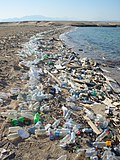 Beach in Sharm el-Naga
 -
 Pollution plastique 2
 -
 Piles of plastic waste in Thilafushi, 2012
 -
 Plastic bottle adjacent to hiking trail
 -
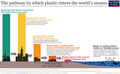 Pathway of plastic to ocean
 -
 Beach cleanup
 -
 Plastic bottle stuck on edge of river


.jpg)


