Gold nanoparticles in chemotherapy: Difference between revisions
CSV import Tags: mobile edit mobile web edit |
CSV import |
||
| Line 34: | Line 34: | ||
[[Category:Chemotherapy]] | [[Category:Chemotherapy]] | ||
{{pharmacology-stub}} | {{pharmacology-stub}} | ||
<gallery> | |||
File:Gold Nanoparticles.jpg|Gold Nanoparticles | |||
File:Gold255.jpg|Gold Nanoparticles in Chemotherapy | |||
File:3418179 ijn-7-4007f2.png|Gold Nanoparticles in Chemotherapy | |||
File:Cetyltrimethyl ammonium bromide.svg|Gold Nanoparticles in Chemotherapy | |||
</gallery> | |||
Latest revision as of 01:34, 20 February 2025
Gold nanoparticles in chemotherapy are a form of nanotechnology that has been extensively researched for its potential in cancer treatment. Gold nanoparticles (AuNPs) are small gold particles with a diameter of 1 to 100 nanometers (nm). Due to their unique optical, chemical, and physical properties, they have been explored as carriers for drug delivery, agents for photothermal therapy, and as contrast agents in imaging techniques. This article delves into the application, mechanisms, advantages, and challenges of using gold nanoparticles in chemotherapy.
Overview[edit]
Chemotherapy is a type of cancer treatment that uses drugs to kill cancer cells. However, traditional chemotherapy can affect both cancerous and healthy cells, leading to various side effects. Gold nanoparticles offer a promising approach to target cancer cells more precisely, minimizing damage to healthy cells.
Application in Chemotherapy[edit]
Gold nanoparticles can be conjugated with chemotherapeutic agents, allowing for targeted delivery to tumor cells. This targeting can be achieved through passive or active mechanisms. Passive targeting exploits the enhanced permeability and retention (EPR) effect of tumor tissues, whereas active targeting involves modifying the surface of AuNPs with ligands that specifically bind to receptors overexpressed on cancer cells.
Drug Delivery[edit]
AuNPs can be designed to carry chemotherapeutic drugs directly to cancer cells. The surface of gold nanoparticles can be functionalized with anticancer drugs, which are released once the nanoparticles reach the tumor site. This targeted delivery can increase the drug concentration at the tumor site while reducing systemic exposure and side effects.
Photothermal Therapy[edit]
Gold nanoparticles can absorb light, particularly in the near-infrared (NIR) region, and convert it into heat. This property is utilized in photothermal therapy (PTT), where AuNPs are directed towards tumor cells and irradiated with NIR light. The generated heat destroys the cancer cells while sparing the surrounding healthy tissue.
Imaging[edit]
In addition to therapeutic applications, gold nanoparticles can enhance the contrast in imaging techniques such as computed tomography (CT) and photoacoustic imaging. This helps in the precise localization of tumors and monitoring the efficacy of the treatment.
Advantages[edit]
- Targeted Delivery: Gold nanoparticles can be engineered to specifically target cancer cells, reducing the impact on healthy cells.
- Controlled Release: The drug release can be controlled through the design of the nanoparticle, allowing for sustained release over time.
- Combination Therapy: AuNPs enable the combination of chemotherapy with other treatments like photothermal therapy, potentially increasing the efficacy of cancer treatment.
- Improved Imaging: The use of AuNPs in imaging provides better resolution and contrast, aiding in the accurate diagnosis and monitoring of tumors.
Challenges[edit]
- Biodistribution and Clearance: Understanding and controlling the distribution of AuNPs in the body and their clearance is crucial to minimize potential toxicity.
- Biocompatibility: Ensuring that gold nanoparticles are biocompatible and do not induce adverse immune responses is essential for their safe use.
- Scalability: Developing cost-effective and scalable methods for producing gold nanoparticles with precise characteristics is necessary for their widespread application in chemotherapy.
Conclusion[edit]
Gold nanoparticles hold significant promise in enhancing the specificity, efficacy, and safety of chemotherapy. Their ability to target tumor cells, combined with their applications in drug delivery, photothermal therapy, and imaging, positions them as a valuable tool in the fight against cancer. However, overcoming the challenges related to their use is crucial for their successful integration into clinical practice.

-
 Gold Nanoparticles
 -
 Gold Nanoparticles in Chemotherapy
 -
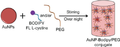 Gold Nanoparticles in Chemotherapy
 -
 Gold Nanoparticles in Chemotherapy


