Discovery and development of phosphodiesterase 5 inhibitors: Difference between revisions
CSV import |
CSV import |
||
| Line 27: | Line 27: | ||
[[Category:Drug Discovery]] | [[Category:Drug Discovery]] | ||
{{pharmacology-stub}} | {{pharmacology-stub}} | ||
<gallery> | |||
File:pde5 dd fig1.jpg|pde5 dd fig1 | |||
File:pde5 dd fig2.jpg|pde5 dd fig2 | |||
File:pde5 dd fig3.jpg|pde5 dd fig3 | |||
File:pde5ddfig4.svg|pde5ddfig4 | |||
File:Biological pathway of penile erection.png|Biological pathway of penile erection | |||
File:PDE5domains.png|PDE5domains | |||
File:Figure 3. PDE5 Domains.png|Figure 3. PDE5 Domains | |||
</gallery> | |||
Latest revision as of 05:43, 3 March 2025
Discovery and Development of Phosphodiesterase 5 Inhibitors
The discovery and development of Phosphodiesterase 5 inhibitors (PDE5 inhibitors) represent a significant advancement in the field of pharmacology and medicine, particularly in the treatment of erectile dysfunction (ED) and other conditions such as pulmonary hypertension. This article outlines the historical context, discovery process, and development of these compounds, highlighting their impact on medical therapy and ongoing research.
Historical Context[edit]
Before the discovery of PDE5 inhibitors, treatment options for erectile dysfunction were limited and often invasive. Options included penile implants, vacuum erection devices, and intracavernosal injections. The need for a non-invasive, orally administered treatment was evident, driving research and development in the pharmacological field.
Discovery[edit]
The discovery of PDE5 inhibitors was somewhat serendipitous. In the late 1980s and early 1990s, scientists at Pfizer were working on a new drug, Sildenafil, initially intended to treat angina pectoris. During clinical trials, it was observed that sildenafil had a modest effect on angina but could induce marked penile erections. This unexpected side effect led researchers to repurpose sildenafil for the treatment of ED, resulting in the first PDE5 inhibitor to be approved by the FDA in 1998, marketed under the brand name Viagra.
Mechanism of Action[edit]
PDE5 inhibitors work by blocking the enzyme phosphodiesterase type 5 (PDE5) found predominantly in the corpus cavernosum tissue of the penis. Inhibition of PDE5 increases the levels of cyclic guanosine monophosphate (cGMP), leading to relaxation of smooth muscle cells and vasodilation, which facilitates the flow of blood into the corpus cavernosum and results in an erection.
Development and Approval[edit]
Following the success of sildenafil, other PDE5 inhibitors were developed, including Tadalafil (Cialis) and Vardenafil (Levitra), each with unique pharmacokinetic profiles allowing for longer duration of action or faster onset. These drugs underwent rigorous clinical trials to demonstrate their efficacy and safety before receiving FDA approval for the treatment of ED. Additionally, the scope of PDE5 inhibitors expanded to include the treatment of pulmonary hypertension, with sildenafil and tadalafil being approved for this indication as well.
Impact on Medical Therapy[edit]
The introduction of PDE5 inhibitors has revolutionized the treatment of erectile dysfunction, offering a convenient and effective option for millions of men worldwide. Their development has also spurred further research into the molecular mechanisms of penile erection and the potential therapeutic targets for sexual dysfunction.
Ongoing Research[edit]
Research continues in the field of PDE5 inhibitors, including the development of new compounds with improved efficacy, reduced side effects, and broader therapeutic applications. Studies are also exploring the potential use of these drugs in treating other conditions, such as stroke recovery and heart failure.
Conclusion[edit]
The discovery and development of phosphodiesterase 5 inhibitors have had a profound impact on the field of sexual medicine and beyond. These drugs not only provide a highly effective treatment option for erectile dysfunction but also highlight the importance of serendipity in drug discovery and the potential for repurposing medications for new therapeutic areas.

-
pde5 dd fig1
-
pde5 dd fig2
-
 pde5 dd fig3
 -
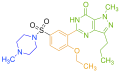 pde5ddfig4
 -
 Biological pathway of penile erection
 -
 PDE5domains
 -
 Figure 3. PDE5 Domains


