Autosomal recessive multiple epiphyseal dysplasia: Difference between revisions
CSV import |
CSV import |
||
| Line 34: | Line 34: | ||
{{medicine-stub}} | {{medicine-stub}} | ||
<gallery> | |||
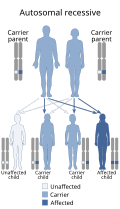
File:Autosomal recessive - en.svg|Autosomal recessive inheritance pattern | |||
</gallery> | |||
Revision as of 00:40, 20 February 2025
Autosomal Recessive Multiple Epiphyseal Dysplasia (ARMED) is a rare genetic disorder characterized by abnormalities in the developing bones and cartilage, particularly in the epiphyses (the rounded ends of the bones). This condition is part of a group of disorders known as skeletal dysplasias, which affect the growth and development of bones and cartilage.
Causes
ARMED is caused by mutations in specific genes that are important for the development and maintenance of bone and cartilage. It is an autosomal recessive condition, meaning that an individual must inherit two copies of the mutated gene, one from each parent, to be affected. The most commonly implicated genes in ARMED include MATN3, COL9A2, and COL9A3, among others.
Symptoms
The symptoms of ARMED can vary widely among affected individuals but generally include:
- Delayed growth and short stature
- Pain and stiffness in the joints
- Abnormalities in the shape and size of the epiphyses, leading to early-onset osteoarthritis
- Possible involvement of other tissues, such as the skin, eyes, and ears
Diagnosis
Diagnosis of ARMED is based on a combination of clinical evaluation, family history, and imaging studies such as X-rays, which can reveal characteristic abnormalities in the epiphyses. Genetic testing can confirm the diagnosis by identifying mutations in the genes associated with the condition.
Treatment
There is no cure for ARMED, and treatment focuses on managing symptoms and improving quality of life. This may include:
- Physical therapy and occupational therapy to maintain joint function and mobility
- Pain management strategies
- Surgical interventions to correct bone deformities or replace joints damaged by osteoarthritis
Prognosis
The prognosis for individuals with ARMED varies depending on the severity of symptoms and the extent of joint involvement. With appropriate management, most affected individuals can lead active lives, although they may experience limitations in physical activity and require interventions to manage joint pain and mobility issues.
See also

-
 Autosomal recessive inheritance pattern

