Havana syndrome: Difference between revisions
CSV import Tags: mobile edit mobile web edit |
CSV import Tags: mobile edit mobile web edit |
||
| Line 21: | Line 21: | ||
{{medicine-stub}} | {{medicine-stub}} | ||
== Havana_syndrome == | |||
<gallery> | |||
File:Hotelnacionale.jpg|Hotel Nacional de Cuba | |||
File:LocationCuba.svg|Location of Cuba | |||
File:Consulate_General_of_the_United_States_in_Guangzhou.jpg|Consulate General of the United States in Guangzhou | |||
File:US-Botschaft_Wien.JPG|US Embassy in Vienna | |||
File:Keck_Center_of_the_National_Academies.JPG|Keck Center of the National Academies | |||
File:NIH_Clinical_Research_Center_aerial.jpg|NIH Clinical Research Center aerial view | |||
</gallery> | |||
Revision as of 23:52, 24 February 2025
Havana Syndrome is a set of medical signs and symptoms reported by United States and Canadian embassy staff first in Havana, Cuba, dating back to late 2016. The syndrome includes a variety of symptoms such as hearing strange grating noises, feeling vibrations, and experiencing headaches, fatigue, dizziness, sleep problems, and cognitive difficulties. Some individuals have reported long-term health issues, including brain injuries. The cause of Havana Syndrome remains uncertain, with theories ranging from sonic attacks to psychological factors, but no definitive explanation has been established.
Symptoms and Diagnosis
The primary symptoms associated with Havana Syndrome include acute onset of perceived loud noises, a feeling of pressure or vibration in the head, and pain in the ears or more generalized pain. Affected individuals have also reported symptoms consistent with concussion or mild traumatic brain injury without any physical trauma. These symptoms have led to significant concern and investigation due to their mysterious onset and the difficulty in diagnosing and treating the condition.
Possible Causes
Several theories have been proposed regarding the cause of Havana Syndrome. Initially, it was suspected to be a sonic attack, possibly using a device that emits sound waves beyond the range of human hearing. Other theories have suggested microwave or electromagnetic weapons could be responsible. Psychological factors, such as mass psychogenic illness, have also been considered. Despite extensive investigations by the U.S. government and other entities, a conclusive cause has not been identified.
Investigations
The U.S. government has conducted multiple investigations into Havana Syndrome, involving agencies such as the Federal Bureau of Investigation (FBI) and the Central Intelligence Agency (CIA). The National Academies of Sciences, Engineering, and Medicine released a report suggesting that directed, pulsed radio frequency energy could be a plausible cause. However, the investigations have faced challenges due to the lack of physical evidence and the broad range of symptoms reported.
Impact
Havana Syndrome has had a significant impact on diplomatic relations, particularly between the United States and Cuba. It has also affected U.S. and Canadian embassy staff in other countries, with reports of similar incidents occurring worldwide. The syndrome has raised concerns about the safety of diplomatic personnel and the need for improved security measures to protect them from potential threats.
Response
In response to Havana Syndrome, the U.S. government has implemented measures to better protect its diplomatic staff, including enhanced medical screenings and the establishment of protocols for reporting and responding to similar incidents. The U.S. Congress has also passed legislation to provide support and compensation to affected individuals.

Havana_syndrome
-
 Hotel Nacional de Cuba
 -
 Location of Cuba
 -
 Consulate General of the United States in Guangzhou
 -
 US Embassy in Vienna
 -
 Keck Center of the National Academies
 -
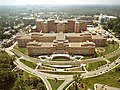 NIH Clinical Research Center aerial view


