Norah Schuster: Difference between revisions
CSV import |
CSV import |
||
| Line 15: | Line 15: | ||
[[Category:Pathologists]] | [[Category:Pathologists]] | ||
{{medicine-stub}} | {{medicine-stub}} | ||
<gallery> | |||
File:Hands_by_Arthur_Schuster.jpg|Norah Schuster | |||
File:Nora_Schuster_aged_3,_seated,_facing_forwards._Photograph,_c_Wellcome_V0029561.jpg|Norah Schuster aged 3, seated, facing forwards | |||
File:First_meeting_of_the_British_Pathological_Association,_1928._Wellcome_L0012180.jpg|First meeting of the British Pathological Association, 1928 | |||
</gallery> | |||
Latest revision as of 04:26, 18 February 2025

Norah Schuster (1887–1979) was a prominent figure in the field of pathology, known for her significant contributions to medical education and research. Born in London, she embarked on her medical career at a time when female participation in the profession was limited. Schuster's dedication to her field, coupled with her pioneering spirit, helped pave the way for future generations of women in medicine.
Early Life and Education[edit]
Norah Schuster was born into a family that valued education and intellectual pursuit. Despite the societal constraints of her time, she pursued higher education with vigor. She attended the London School of Medicine for Women, which was affiliated with the Royal Free Hospital. Schuster's academic excellence and determination were evident early on, setting the stage for her impactful career.
Career and Contributions[edit]
After completing her medical degree, Schuster specialized in pathology, a field that was rapidly evolving during her time. She worked at the Royal Free Hospital and later at the London Hospital, where she made significant contributions to the understanding of various diseases. Schuster's research was characterized by meticulous attention to detail and a deep commitment to advancing medical knowledge. One of Schuster's notable contributions was her work on the pathology of tuberculosis, a major health concern in the early 20th century. Her research provided valuable insights into the disease's progression and potential treatments. Schuster also had a keen interest in medical education, advocating for hands-on learning and the integration of clinical practice with theoretical knowledge. She was instrumental in developing educational programs that emphasized the importance of pathology in medical training.
Legacy[edit]
Norah Schuster's legacy extends beyond her contributions to pathology and medical education. She was a trailblazer for women in medicine, demonstrating that gender should not be a barrier to achieving excellence in the medical profession. Schuster's career served as an inspiration to many, encouraging women to pursue their interests in science and medicine. Throughout her life, Schuster was recognized for her achievements and dedication to medicine. Her work has been cited in numerous medical publications, and she remains a respected figure in the history of British medicine.
Conclusion[edit]
Norah Schuster's life and career exemplify the impact that one individual can have on a field and society. Her contributions to pathology and medical education have left a lasting imprint on the medical community. Schuster's pioneering spirit and dedication to her profession continue to inspire future generations of medical professionals.

-
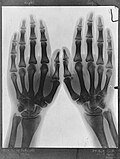 Norah Schuster
 -
 Norah Schuster aged 3, seated, facing forwards
 -
 First meeting of the British Pathological Association, 1928


