Plasma cell gingivitis: Difference between revisions
CSV import |
CSV import |
||
| Line 42: | Line 42: | ||
{{Medicine-stub}} | {{Medicine-stub}} | ||
<gallery> | |||
File:Plasma_cell_gingivitis_in_adult.jpg|Plasma cell gingivitis in adult | |||
File:Plasma_cell_gingivitis_on_7_yerars_old_child.jpg|Plasma cell gingivitis on 7 years old child | |||
File:Plasma_cell_gingivitis_in_a_10_year_old_child.jpg|Plasma cell gingivitis in a 10 year old child | |||
File:Histology_of_plasma_cell_gingivitis.jpg|Histology of plasma cell gingivitis | |||
</gallery> | |||
Revision as of 04:23, 18 February 2025
Plasma Cell Gingivitis is a rare inflammatory condition of the gingiva characterized by a dense infiltration of plasma cells. The condition is also known by other names such as atypical gingivostomatitis or plasma cell gingivostomatitis. It presents clinically as diffuse, erythematous, and edematous enlargement of the gingiva, often with a smooth, shiny appearance. The condition can affect any age group but is more commonly observed in adults. The exact etiology of plasma cell gingivitis is not well understood, but it is believed to be a hypersensitivity reaction to various antigens.
Etiology
The etiology of plasma cell gingivitis is multifactorial. Potential triggers include:
- Allergic reactions to ingredients in toothpaste, mouthwash, or chewing gum, particularly cinnamon and peppermint.
- Dietary proteins.
- Certain medications.
- Dental materials.
Clinical Presentation
Patients with plasma cell gingivitis typically present with:
- Diffuse gingival erythema and edema.
- Gingival bleeding with minimal provocation.
- Occasionally, a burning sensation or discomfort in the gingiva.
- In severe cases, the condition may extend to the buccal mucosa and lips.
Diagnosis
Diagnosis of plasma cell gingivitis is primarily clinical, supported by histopathological findings. Key diagnostic steps include:
- Detailed medical and dental history to identify potential allergens.
- Clinical examination of the oral cavity.
- Biopsy of the affected gingiva, revealing dense plasma cell infiltration.
Treatment
Treatment of plasma cell gingivitis involves:
- Identification and elimination of the causative agent.
- Strict oral hygiene measures.
- Topical or systemic corticosteroids to reduce inflammation.
- In refractory cases, other immunosuppressive agents may be considered.
Prognosis
With proper identification and elimination of the causative agent, along with appropriate management, the prognosis for plasma cell gingivitis is generally good. However, recurrence is possible if exposure to the allergen persists.
Prevention
Preventive measures for plasma cell gingivitis include:
- Avoidance of known allergens.
- Use of hypoallergenic oral care products.
- Regular dental check-ups to maintain good oral hygiene.

-
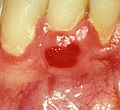 Plasma cell gingivitis in adult
 -
 Plasma cell gingivitis on 7 years old child
 -
 Plasma cell gingivitis in a 10 year old child
 -
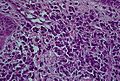 Histology of plasma cell gingivitis


