Farm: Difference between revisions
CSV import |
CSV import |
||
| Line 39: | Line 39: | ||
{{Agriculture-stub}} | {{Agriculture-stub}} | ||
<gallery> | |||
File:Church_Farm,_Stockton,_Norfolk_-_geograph.org.uk_-_1968544.jpg|Farm | |||
File:Plan_mediaeval_manor.jpg|Farm | |||
File:Marion_Cty,_Iowa_Farmer_w_mule_drawn_wagon,_1920s.jpg|Farm | |||
File:Centres_of_origin_and_spread_of_agriculture.svg|Farm | |||
File:Dell_City,_Texas_(29994634276).jpg|Farm | |||
File:Cow_milking_machine_in_action_DSC04132.jpg|Farm | |||
File:Poultry_Farming_in_Nepal2.jpg|Farm | |||
File:Farming_near_Klingerstown,_Pennsylvania.jpg|Farm | |||
File:Ontario_farm.jpg|Farm | |||
File:Rieten_dak_old_farmhouse.jpg|Farm | |||
File:chinafarmland.jpg|Farm | |||
File:Jamnapari_goat.jpg|Farm | |||
</gallery> | |||
Latest revision as of 12:09, 18 February 2025
Farm is a land area primarily devoted to agricultural processes with the primary objective of producing food and other crops; it is the basic facility in food production. The development of farming marked the transition from nomadic societies to settled, agriculture-based communities, and plays a crucial role in the history of civilization.
Types of Farms[edit]
Farms can vary greatly depending on the product they produce and the methods they employ to produce it. Key types include:
- Arable Farming: Involves the cultivation of crops such as wheat, maize, and rice as the main activity.
- Dairy Farming: Focuses on the production of milk from livestock, primarily cows, goats, or sheep.
- Poultry Farming: Centers on raising birds such as chickens, ducks, and turkeys for meat or eggs.
- Mixed Farming: Combines crop cultivation with the raising of livestock on the same farm.
- Organic Farming: Utilizes natural substances and farming methods to maintain soil fertility and ecological balance, minimizing pollution and waste.
Importance of Farms[edit]
Farms are critical for several reasons:
- Food Production: They are the primary source of the world's food supply.
- Economic Activity: Farming is a significant economic driver, providing employment and livelihoods for a large portion of the global population.
- Cultural Heritage: Many farming practices and traditions are integral parts of cultural identities around the world.
- Environmental Stewardship: Sustainable farming practices can help preserve biodiversity, manage natural resources, and combat climate change.
Challenges Facing Farms[edit]
Modern farms face numerous challenges, including:
- Climate Change: Altered weather patterns can disrupt farming cycles, affecting crop yields and livestock.
- Sustainability: The need to produce more food without depleting natural resources or harming the environment.
- Economic Pressures: Market fluctuations, trade policies, and the global economy can impact farm profitability.
- Technological Advancements: Keeping up with new technologies for efficient farming requires significant investment.
Future of Farming[edit]
The future of farming is likely to be shaped by advances in technology, such as precision agriculture, genetically modified crops, and automation. These innovations promise to increase efficiency and reduce environmental impacts, but they also raise ethical and economic concerns.
See Also[edit]

This article is a agriculture stub. You can help WikiMD by expanding it!
-
 Farm
Farm -
 Farm
Farm -
 Farm
Farm -
 Farm
Farm -
 Farm
Farm -
 Farm
Farm -
 Farm
Farm -
 Farm
Farm -
 Farm
Farm -
 Farm
Farm -
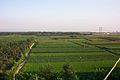 Farm
Farm -
 Farm
Farm


.jpg)


