Sahasrara: Difference between revisions
CSV import |
CSV import |
||
| Line 33: | Line 33: | ||
{{Spirituality-stub}} | {{Spirituality-stub}} | ||
<gallery> | |||
File:Sahasrara Mandala.svg|Sahasrara Mandala | |||
File:Ayyavali Sahasrara.PNG|Ayyavali Sahasrara | |||
File:Brahmin practising Recaka in Pranayama.jpg|Brahmin practising Recaka in Pranayama | |||
File:BinduChakra.svg|Bindu Chakra | |||
File:Attoor Thangal.JPG|Attoor Thangal | |||
</gallery> | |||
Latest revision as of 05:52, 3 March 2025
Sahasrara, also known as the crown chakra, is considered the seventh primary chakra according to most Yoga traditions and Tantric practices. Situated at the crown of the head, it is often depicted as a lotus with a thousand petals, symbolizing the infinite and the connection to the divine. Sahasrara is associated with the highest state of enlightenment and spiritual connection in various spiritual traditions, including Hinduism, Buddhism, and New Age practices.
Etymology and Symbolism[edit]
The term Sahasrara is derived from the Sanskrit words sahasra, meaning 'thousand', and ara, meaning 'spoke or wheel'. This chakra is visualized as a lotus flower with a thousand petals, each representing a different aspect of the mind and consciousness. The Sahasrara chakra is often associated with the color violet or white, symbolizing purity and the transcendence of the physical realm.
Location and Description[edit]
The Sahasrara chakra is located at the top of the head or slightly above it. Unlike the other six chakras, which are associated with specific parts of the body, the crown chakra is more concerned with the mind and spirit. It is the point of connection between the individual and the universe, the finite and the infinite.
Function and Importance[edit]
The primary function of the Sahasrara chakra is to facilitate spiritual connection and enlightenment. It is through this chakra that individuals can transcend the limitations of the physical body and the ego, experiencing a state of oneness with all that is. The Sahasrara chakra is also associated with higher states of consciousness, wisdom, and understanding.
Signs of Imbalance[edit]
A balanced Sahasrara chakra is characterized by a deep sense of peace, spiritual fulfillment, and a feeling of being connected to the universe. An imbalance in this chakra can manifest as a feeling of spiritual disconnection, cynicism, and a lack of purpose or direction. Physical symptoms may include neurological disorders, headaches, and mental health issues such as depression and anxiety.
Practices for Balancing[edit]
Balancing the Sahasrara chakra involves practices that promote spiritual growth and connection. These can include meditation, particularly focusing on the crown of the head, prayer, and engaging in activities that foster a sense of unity and oneness. Yoga practices such as headstands and other inversions can also stimulate the Sahasrara chakra.
Cultural and Spiritual Significance[edit]
The concept of the Sahasrara chakra has deep roots in Hindu philosophy, Buddhist meditation practices, and modern New Age spirituality. It is often associated with the ultimate goal of various spiritual paths, including the attainment of Nirvana in Buddhism and Moksha in Hinduism.
See Also[edit]

This article is a spirituality-related stub. You can help WikiMD by expanding it!
-
 Sahasrara Mandala
 -
 Ayyavali Sahasrara
 -
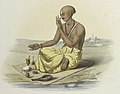 Brahmin practising Recaka in Pranayama
 -
 Bindu Chakra
 -
 Attoor Thangal


