Auditory fatigue: Difference between revisions
CSV import Tags: mobile edit mobile web edit |
CSV import |
||
| Line 23: | Line 23: | ||
{{Medicine-stub}} | {{Medicine-stub}} | ||
<gallery> | |||
File:Anatomy_of_the_Human_Ear_en.svg|Anatomy of the Human Ear | |||
File:Right_osseous_labyrinth_svg_hariadhi.svg|Right Osseous Labyrinth | |||
File:Cochlea.svg|Cochlea | |||
File:Gray931.png|Auditory fatigue | |||
</gallery> | |||
Latest revision as of 04:58, 18 February 2025
Auditory fatigue is a temporary reduction in hearing sensitivity following exposure to sound. This phenomenon can occur after both short, intense exposures and longer exposures to sounds of lower intensity. Auditory fatigue is an important concept in the fields of audiology, occupational health, and hearing conservation, as it can indicate the onset of more permanent hearing damage if the ears are repeatedly exposed to harmful levels of noise.
Causes[edit]
Auditory fatigue is primarily caused by prolonged exposure to noise levels above 85 decibels (dB), which can lead to temporary threshold shift (TTS), a temporary decrease in hearing sensitivity. The mechanisms behind auditory fatigue involve the overstimulation of the hair cells in the cochlea, which can lead to their temporary dysfunction. Other contributing factors may include changes in the blood flow to the inner ear and the exhaustion of the metabolic reserves necessary for hair cell function.
Symptoms[edit]
The main symptom of auditory fatigue is a temporary reduction in hearing sensitivity. This may be accompanied by a feeling of fullness in the ears, tinnitus (ringing in the ears), and difficulties in understanding speech, especially in noisy environments. The severity and duration of these symptoms can vary depending on the intensity and duration of the noise exposure.
Prevention and Management[edit]
Preventing auditory fatigue involves minimizing exposure to loud noises, using hearing protection when necessary, and adhering to safe listening practices. This can include using earplugs or earmuffs in noisy environments, following the 60/60 rule when using personal audio devices (listening at no more than 60% volume for no more than 60 minutes at a time), and taking regular breaks from noise exposure.
Management of auditory fatigue typically involves rest and avoidance of further noise exposure until hearing sensitivity returns to normal. In most cases, auditory fatigue is reversible, and hearing thresholds return to their baseline levels within a few hours to a few days after noise exposure. However, repeated episodes of auditory fatigue can lead to permanent hearing damage, underscoring the importance of prevention and early intervention.
Diagnosis[edit]
Diagnosis of auditory fatigue involves a comprehensive hearing assessment conducted by an audiologist. This may include pure-tone audiometry to measure hearing thresholds and otoacoustic emissions testing to assess cochlear function. These tests can help determine the extent of hearing loss and the potential for recovery.
Conclusion[edit]
Auditory fatigue is a significant concern in hearing health, highlighting the need for increased awareness and preventive measures to protect against noise-induced hearing damage. By understanding the causes, symptoms, and management strategies for auditory fatigue, individuals can take proactive steps to preserve their hearing health and prevent long-term auditory damage.

-
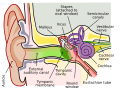 Anatomy of the Human Ear
 -
 Right Osseous Labyrinth
 -
 Cochlea
 -
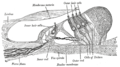 Auditory fatigue


