Integer overflow: Difference between revisions
CSV import |
CSV import |
||
| Line 35: | Line 35: | ||
[[Category:Software anomalies]] | [[Category:Software anomalies]] | ||
{{Comp-sci-stub}} | {{Comp-sci-stub}} | ||
== Integer_overflow == | |||
<gallery> | |||
File:Odometer_rollover.jpg|Odometer rollover illustrating integer overflow | |||
File:Error_message_due_to_an_integer_signedness_bug_in_the_stack_setup_code_of_MASM_1.00.gif|Error message due to an integer signedness bug in the stack setup code of MASM 1.00 | |||
</gallery> | |||
Latest revision as of 01:46, 18 February 2025
Integer overflow occurs when an arithmetic operation attempts to create a numeric value that is outside of the range that can be represented with a given number of digits – either higher than the maximum or lower than the minimum representable value. In computer science, this is a critical issue as it can lead to unexpected behavior, including software vulnerabilities and bugs, particularly in the context of programming languages, computer security, and digital systems design.
Overview[edit]
An integer overflow happens when a calculation results in a number that is greater than the maximum value the data type can hold. For example, in a system where integers are represented by 32 bits, the maximum representable unsigned integer is 2^32 - 1 (4,294,967,295). If an operation tries to produce a number larger than this, without proper handling, an overflow will occur, and the actual result may wrap around to a negative number or reset to zero, depending on the system and data type conventions.
Causes[edit]
The primary cause of integer overflow is the fixed-size nature of data types in computer programming. When the result of an arithmetic operation exceeds the storage capacity of the assigned data type, the excess bits are discarded, often leading to incorrect and unexpected results. This behavior is not limited to arithmetic operations but can also occur in casting and conversion processes between different data types.
Consequences[edit]
Integer overflow can have a range of consequences from benign to severe, including:
- Incorrect program results, leading to software bugs.
- Security vulnerabilities, as attackers might exploit overflow conditions to execute arbitrary code or cause a denial of service.
- Crashes or freezes if the overflow triggers a fault in the system.
Prevention and Mitigation[edit]
To prevent or mitigate the risks associated with integer overflow, developers can use several strategies:
- Using larger data types to ensure that operations do not exceed the maximum value.
- Implementing checks before operations to ensure that the result will not overflow.
- Utilizing programming languages or compilers that automatically check for overflow conditions.
- Employing safe libraries designed to handle arithmetic operations securely.
Examples[edit]
A classic example of integer overflow is the Y2K problem, where the use of two digits to represent years would have led to incorrect date calculations starting in the year 2000. Another well-known instance is the Ariane 5 Flight 501 failure, where an integer overflow in the onboard guidance computer caused the rocket to veer off course and self-destruct.
See Also[edit]
References[edit]
<references/>

This article is a computer science stub. You can help WikiMD by expanding it!
Integer_overflow[edit]
-
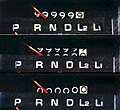 Odometer rollover illustrating integer overflow
 -
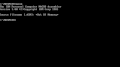 Error message due to an integer signedness bug in the stack setup code of MASM 1.00


