Calponin 2: Difference between revisions
CSV import |
CSV import |
||
| Line 27: | Line 27: | ||
[[Category:Gene expression]] | [[Category:Gene expression]] | ||
{{medicine-stub}} | {{medicine-stub}} | ||
== Calponin_2 == | |||
<gallery> | |||
File:CNN2_wikipage.jpg|Calponin_2 | |||
File:Calponin_interacted_proteins_wikigene_fianl.jpg|Calponin_2 | |||
</gallery> | |||
Latest revision as of 01:38, 18 February 2025
Calponin 2, also known as CNN2, is a protein that in humans is encoded by the CNN2 gene. It belongs to the calponin family, which plays significant roles in the regulation of smooth muscle contraction and cell motility in non-muscle cells. Calponin 2 is particularly important in the context of vascular smooth muscle function and has been implicated in various cellular processes including regulation of actin cytoskeleton dynamics, cell shape, and motility.
Function[edit]
Calponin 2 is involved in the regulation of smooth muscle contraction. It binds to actin filaments and is thought to be a significant modulator of actin cytoskeleton dynamics. By interacting with actin and possibly other components of the contractile apparatus, it contributes to the regulation of muscle contraction and relaxation. In non-muscle cells, Calponin 2 is implicated in controlling cell shape, adhesion, and motility, which are essential for various physiological and pathological processes.
Gene and Expression[edit]
The CNN2 gene is located on chromosome 19 in humans. It is expressed in a wide range of tissues but is particularly abundant in smooth muscle tissues and various non-muscle cells. The expression of Calponin 2 is regulated by various factors, including growth factors, cytokines, and mechanical stress, reflecting its role in diverse cellular functions and responses to environmental cues.
Clinical Significance[edit]
Alterations in the expression or function of Calponin 2 have been associated with several pathological conditions. Its role in smooth muscle function suggests a potential involvement in vascular diseases, such as hypertension and atherosclerosis. Moreover, changes in Calponin 2 expression levels have been observed in certain types of cancer, indicating a possible role in tumorigenesis and cancer progression. However, the precise mechanisms by which Calponin 2 contributes to these diseases remain an area of active research.
Research[edit]
Research on Calponin 2 has focused on elucidating its molecular functions and interactions with other proteins, as well as its involvement in various diseases. Studies using model organisms and cell culture systems have provided insights into its role in actin cytoskeleton regulation, cell motility, and smooth muscle contraction. Ongoing research aims to further understand the biological functions of Calponin 2 and its potential as a therapeutic target in vascular diseases and cancer.
See Also[edit]
References[edit]
<references/>

Calponin_2[edit]
-
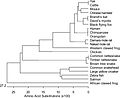 Calponin_2
 -
 Calponin_2


