Latua: Difference between revisions
CSV import |
CSV import |
||
| Line 31: | Line 31: | ||
[[Category:Medicinal plants]] | [[Category:Medicinal plants]] | ||
{{medicine-stub}} | {{medicine-stub}} | ||
<gallery> | |||
File:Latua_pubiflora_pale_flower_dark_veins.jpg|Latua | |||
File:August_Heinrich_Rudolf_Grisebach.jpg|August Heinrich Rudolf Grisebach | |||
File:Rodolfo_Amando_Philippi.jpg|Rodolfo Amando Philippi | |||
File:Baillon,_Henri_Ernest_(1827-1895)_CIPN21501.jpg|Henri Ernest Baillon | |||
File:Los_Lagos_in_Chile_2018.svg|Los Lagos in Chile 2018 | |||
File:Pueblos_indigenas_de_Chile.svg|Pueblos indígenas de Chile | |||
File:Mapa_No._31._Provincia_de_Valdivia-7930038_(cropped).jpg|Provincia de Valdivia | |||
File:Mapa_No._32._Provincia_de_Llanquihue-7930039_(cropped).jpg|Provincia de Llanquihue | |||
File:Mapa_No._33._Provincia_de_Chiloe-7930040_(cropped).jpg|Provincia de Chiloé | |||
File:Valdivian_temperate_rainforest.JPG|Valdivian temperate rainforest | |||
File:Solanum_nigrum_subsp._nigrum_+_Solanum_nigrum_subsp._nigrum_var._xanthocarpum_sl1.jpg|Solanum nigrum | |||
File:Rhaphithamnus_spinosus_fruit_at_Logan.jpg|Rhaphithamnus spinosus fruit | |||
</gallery> | |||
Revision as of 11:48, 18 February 2025
Latua pubiflora, commonly known as the witch's broom or palhuén in Mapudungun, is a unique species of plant belonging to the family Solanaceae, which includes other well-known plants such as tomatoes, potatoes, and tobacco. This species is native to the temperate rainforests of southern Chile and adjacent areas of Argentina. It is the only species in the genus Latua.
Description
Latua pubiflora is a small to medium-sized shrub or small tree, reaching heights of up to 1-5 meters. It has simple, alternate leaves that are dark green, glossy, and have a leathery texture. The flowers of Latua pubiflora are particularly striking, with a vivid purple or sometimes white coloration, and are bell-shaped, hanging in clusters. The fruit is a small, round berry that turns black when ripe.
Habitat and Distribution
Latua pubiflora is found in the understory of the Valdivian temperate rainforests, a biome known for its high rainfall and dense forests. It prefers moist, shaded areas and is often found near streams or in ravines. Its distribution is relatively limited, primarily confined to specific regions of southern Chile and parts of Argentina.
Cultural Significance and Uses
In Mapuche folklore, Latua pubiflora is often associated with witchcraft and magic. The plant is believed to possess powerful hallucinogenic properties, and it has been used by shamans in traditional ceremonies to induce visions. However, it is important to note that all parts of the plant are highly toxic, and ingestion can lead to severe poisoning or death.
Toxicity
The toxic properties of Latua pubiflora are attributed to the presence of tropane alkaloids, which are potent neurotoxins. Symptoms of Latua poisoning include hallucinations, delirium, tachycardia, and in severe cases, death. There is no known antidote, and treatment is supportive and symptomatic.
Conservation Status
The conservation status of Latua pubiflora has not been formally assessed by the International Union for Conservation of Nature (IUCN). However, due to its limited range and the ongoing threats to its habitat from deforestation and human development, there is concern about its long-term survival in the wild.
See Also
References
<references/>

-
 Latua
Latua -
 August Heinrich Rudolf Grisebach
 -
 Rodolfo Amando Philippi
 -
 Henri Ernest Baillon
 -
 Los Lagos in Chile 2018
 -
 Pueblos indígenas de Chile
 -
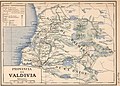 Provincia de Valdivia
 -
 Provincia de Llanquihue
 -
 Provincia de Chiloé
 -
 Valdivian temperate rainforest
 -
 Solanum nigrum
 -
 Rhaphithamnus spinosus fruit


_CIPN21501.jpg)


.jpg)
.jpg)
.jpg)


