Health in India: Difference between revisions
CSV import |
CSV import |
||
| Line 32: | Line 32: | ||
{{medicine-stub}} | {{medicine-stub}} | ||
<gallery> | |||
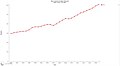
File:Life expectancy development in India.svg|Life expectancy development in India | |||
File:Child mortality rate in India.png|Child mortality rate in India | |||
File:Desolater Gebisszustand, 2020-2.jpg|Desolater Gebisszustand, 2020 | |||
File:Lower lip cancer.jpg|Lower lip cancer | |||
File:Morbidity Communicable Diseases - 2016.jpg|Morbidity Communicable Diseases - 2016 | |||
File:Mortality Communicable Diseases - 2016.jpg|Mortality Communicable Diseases - 2016 | |||
File:IHME NCD India Incidence.jpg|IHME NCD India Incidence | |||
File:IHME NCD India Mortality.jpg|IHME NCD India Mortality | |||
File:Changing lives Ante and post natal care for mums and babies in Orissa (6835364123).jpg|Changing lives Ante and post natal care for mums and babies in Orissa | |||
</gallery> | |||
Latest revision as of 01:29, 20 February 2025
Health in India encompasses a wide range of health issues, including infectious diseases, non-communicable diseases, and environmental health concerns. The country's vast population and regional disparities contribute to the complexity of its health care challenges. This article provides an overview of the health status in India, the healthcare system, and the efforts being made to improve health outcomes.
Overview[edit]
India, with its diverse population exceeding 1.3 billion, faces numerous public health challenges. The country has made significant progress in reducing the prevalence of certain infectious diseases, such as polio and tuberculosis, but still struggles with high rates of maternal and child mortality, malnutrition, and a rising burden of non-communicable diseases such as diabetes, cardiovascular diseases, and cancer.
Healthcare System[edit]
The healthcare system in India is a mix of public and private sector providers. The public healthcare system is primarily funded by the government and offers services at minimal or no cost. However, it is often criticized for being underfunded and overstretched. The private sector, on the other hand, provides a significant portion of healthcare services, especially in urban areas, but can be prohibitively expensive for many citizens.
Primary Healthcare[edit]
Primary healthcare in India is delivered through a network of Primary Health Centres (PHCs) and Community Health Centres (CHCs). These centers are intended to provide accessible and affordable care to the rural population. However, issues such as inadequate infrastructure, shortage of healthcare professionals, and lack of essential medicines often hamper their effectiveness.
Secondary and Tertiary Healthcare[edit]
Secondary healthcare services are provided by district hospitals and specialist clinics, while tertiary care is available in large hospitals and teaching institutions, offering advanced medical care and treatment. These facilities are concentrated in urban areas, leading to disparities in access to healthcare services between urban and rural populations.
Public Health Issues[edit]
India faces a dual burden of infectious and non-communicable diseases. Infectious diseases such as HIV/AIDS, malaria, and dengue fever continue to pose significant health challenges. At the same time, there is a growing prevalence of chronic conditions like hypertension, diabetes, and heart disease. Environmental factors, including air and water pollution, also significantly impact public health.
Nutrition[edit]
Malnutrition remains a critical concern, with high rates of both undernutrition and, increasingly, obesity. The government has implemented various programs, such as the Integrated Child Development Services (ICDS) scheme, to improve nutritional outcomes among children and women.
Healthcare Reforms[edit]
In recent years, the Indian government has launched several initiatives to improve healthcare delivery and access. The Ayushman Bharat program, for example, aims to provide health insurance to millions of economically disadvantaged individuals, improving access to secondary and tertiary healthcare services.
Challenges and Future Directions[edit]
Despite progress, India's healthcare system faces numerous challenges, including inadequate funding, disparities in healthcare access, and a shortage of healthcare professionals. Addressing these issues requires a multi-faceted approach, including increased investment in healthcare infrastructure, training and recruitment of healthcare workers, and policies to reduce the burden of non-communicable diseases.
Conclusion[edit]
Health in India is a complex issue, influenced by socio-economic, environmental, and cultural factors. While significant challenges remain, ongoing efforts to improve healthcare infrastructure, access, and quality hold promise for better health outcomes across the country.

-
 Life expectancy development in India
 -
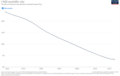 Child mortality rate in India
 -
 Desolater Gebisszustand, 2020
 -
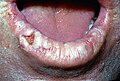 Lower lip cancer
 -
 Morbidity Communicable Diseases - 2016
 -
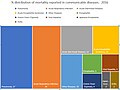 Mortality Communicable Diseases - 2016
 -
 IHME NCD India Incidence
 -
 IHME NCD India Mortality
 -
 Changing lives Ante and post natal care for mums and babies in Orissa


.jpg)
