Dihydroartemisinin: Difference between revisions
CSV import Tags: mobile edit mobile web edit |
CSV import |
||
| Line 25: | Line 25: | ||
{{medicine-stub}} | {{medicine-stub}} | ||
<gallery> | |||
File:Artenimol.svg|Chemical structure of Dihydroartemisinin | |||
File:Dihydroartemisinin_3D_balls.png|3D molecular model of Dihydroartemisinin | |||
File:Artemisiaannua.jpg|Artemisia annua plant | |||
</gallery> | |||
Latest revision as of 02:14, 18 February 2025
Dihydroartemisinin (DHA) is a drug used in the treatment of malaria. Dihydroartemisinin is a semi-synthetic derivative of artemisinin, a natural product of the Chinese herb Artemisia annua, also known as sweet wormwood. DHA is the active metabolite of all artemisinin compounds (artemisinin, artesunate, artemether, etc.) and is also available as a drug in itself.
Pharmacology[edit]
Dihydroartemisinin is a prodrug of the biologically active metabolite dihydroartemisinin. It is activated by serum esterases to dihydroartemisinin, which is thought to interact with heme to cause oxidative damage to the parasite.
Clinical use[edit]
Dihydroartemisinin is used primarily as a treatment for malaria, specifically for Plasmodium falciparum malaria. It is often combined with piperaquine in a fixed-dose combination for the treatment of uncomplicated falciparum malaria. This combination is known as dihydroartemisinin/piperaquine.
Side effects[edit]
The most common side effects of dihydroartemisinin are nausea, vomiting, and anorexia. Less common side effects include dizziness, headache, palpitations, and abdominal pain.
Resistance[edit]
Resistance to dihydroartemisinin has been reported in Southeast Asia. This resistance is associated with mutations in the kelch13 gene of the malaria parasite.
See also[edit]

-
 Chemical structure of Dihydroartemisinin
 -
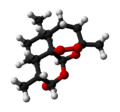 3D molecular model of Dihydroartemisinin
 -
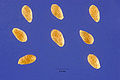 Artemisia annua plant


