Sugar beet: Difference between revisions
CSV import Tags: mobile edit mobile web edit |
CSV import |
||
| Line 26: | Line 26: | ||
{{Agriculture-stub}} | {{Agriculture-stub}} | ||
{{Plant-stub}} | {{Plant-stub}} | ||
<gallery> | |||
File:276_Beta_vulgaris_L.jpg|Sugar beet | |||
File:Inspecting_sugar_beet_plants.jpg|Inspecting sugar beet plants | |||
File:French_sugar_beet_mill,_1843.jpg|French sugar beet mill, 1843 | |||
File:Zuckerrüben_Pflug010.jpg|Sugar beet | |||
File:Sugarbeetoutput.png|Sugar beet | |||
File:Suikerbietenrooier_zesrijige_bunker_(Sugarbeet_harvester).jpg|Sugar beet harvester | |||
File:2005sugar_beet.PNG|Sugar beet | |||
File:Hollogne_sur-geer_-Sucrerie.jpg|Sugar beet | |||
File:Chelsea_Sugar_Refinery_ship.JPG|Sugar beet | |||
File:Božkov_speciál_mandlový_01.jpg|Sugar beet | |||
File:Stroop_houten_lepel.jpeg|Sugar beet | |||
File:Dammanbau_Zuckerruebe.svg|Sugar beet | |||
</gallery> | |||
Revision as of 12:25, 18 February 2025
Sugar beet (Beta vulgaris) is a plant species in the family Amaranthaceae and is one of the two main sources of commercial sugar, the other being sugarcane. Sugar beets are grown in temperate climates, including parts of Europe, northern Asia, and North America.
History
The cultivation of sugar beet dates back to ancient times. However, the extraction of sugar from beetroot was first developed in the 18th century by a German chemist, Andreas Sigismund Marggraf. The commercial production of sugar from sugar beet began in the 19th century, largely in response to the disruption of sugarcane supplies during the Napoleonic Wars.
Cultivation
Sugar beet is a hardy biennial plant that can be grown in a wide range of soils. It requires a good supply of moisture and is therefore often grown in areas with high rainfall or where irrigation is available. The plant is sown in spring and harvested in late autumn or early winter. The roots are harvested, washed, and then transported to a sugar factory for processing.
Processing
At the sugar factory, the beets are sliced into thin strips, or cossettes, and then soaked in hot water to extract the sugar. This produces a raw juice which is then purified and concentrated into a syrup. The syrup is further processed to produce crystalline sugar.
Uses
In addition to the production of sugar, sugar beet is also used for the production of bioethanol, a type of biofuel. The pulp left over after the extraction of sugar is used as animal feed.
Environmental Impact
The cultivation and processing of sugar beet have significant environmental impacts. These include the use of large amounts of water and the release of pollutants into the environment. However, efforts are being made to reduce these impacts through the use of more sustainable farming practices and more efficient processing technologies.
See Also
This article is a agriculture stub. You can help WikiMD by expanding it!

-
 Sugar beet
 -
 Inspecting sugar beet plants
 -
 French sugar beet mill, 1843
 -
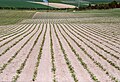 Sugar beet
 -
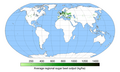 Sugar beet
 -
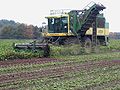 Sugar beet harvester
 -
 Sugar beet
 -
Sugar beet
-
Sugar beet
-
Sugar beet
-
Sugar beet
-
Sugar beet


.jpg)


